Have you ever walked into a beautifully designed 3BHK in Mumbai or Bangalore, looked at the seamless finishes, the soft ambient lighting, and thought, 'This must have cost a fortune'? It is a common misconception that achieving a high-end, luxury look in your Indian home requires a massive bank balance. In reality, expensive-looking interior design is less about the price tag of your furniture and more about how you curate, layer, and present your space. You do not need to spend lakhs on imported Italian marble or premium showrooms to get that plush, inviting aesthetic. By understanding a few simple design secrets, you can easily elevate your home on a modest budget.
In this guide, we will explore practical, pocket-friendly Indian interior design ideas that will make your home look incredibly premium. Whether you are living in a compact 1BHK rental in Pune or setting up a spacious 3BHK in Delhi, these tips work within local constraints, such as relentless monsoon humidity, persistent dust, and restrictive rental agreements. We will look at smart alternatives, specific Indian brands, and styling secrets that elevate your space without draining your savings. Let us dive in and transform your home on a realistic, everyday budget.
1. The Magic of Premium Paint and Color Drenching
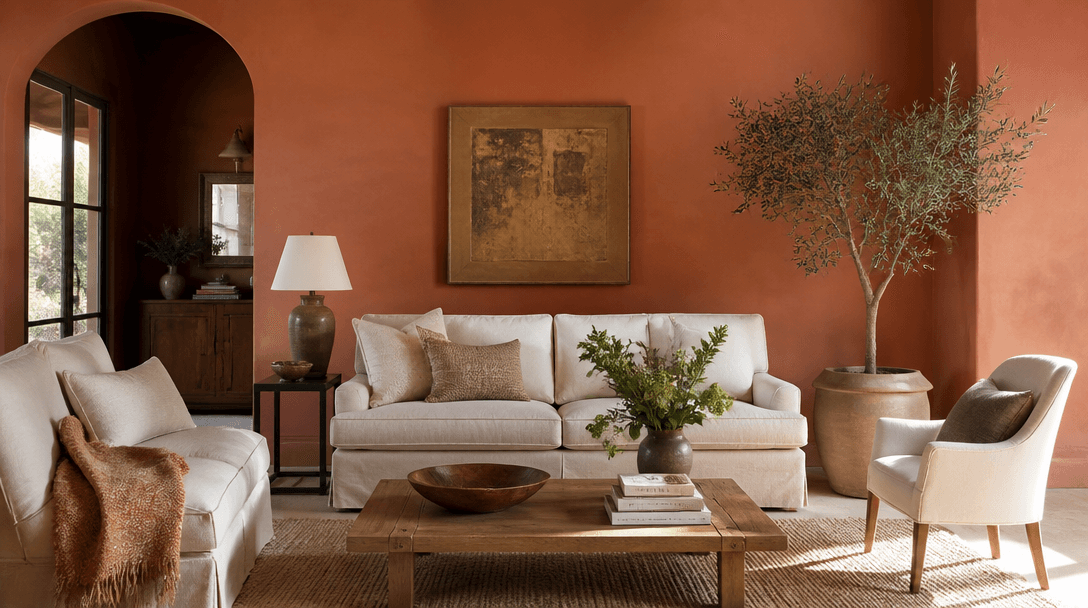
Paint is, hands down, the most affordable tool in your design toolkit, but most people do not use it to its full potential. Instead of choosing standard plastic emulsion paint that looks flat, you can opt for premium paint finishes that instantly elevate your walls. Brands like Asian Paints offer exquisite finishes in their Royale range that mimic high-end textures. For example, instead of spending ₹1,500 per square foot on real stone veneer, you can use a subtle limewash paint or a textured finish like Asian Paints Royale Play. A soft, earthy terracotta or sand-textured wall in your living room creates a stunning, tactile focal point for a fraction of the cost.
Another highly effective design secret is color drenching. This involves painting your walls, baseboards, and even doors in the exact same color, preferably a rich, muted tone like sage green, deep navy, or warm taupe. Color drenching hides imperfections and makes small Indian rooms, such as a compact 2BHK bedroom, look larger and infinitely more cohesive. When your eyes are not interrupted by stark white door frames or contrasting baseboards, the space feels continuous and expensive. Keep the ceiling white to maintain a sense of height, especially if your apartment has standard nine-foot ceilings.
Remember to choose your finishes wisely based on Indian weather conditions. While ultra-matte paint looks incredibly sophisticated, it is notoriously difficult to clean in dusty Indian environments. If you have young children or pets, opt for a luxury matte or low-sheen satin finish. These offer the velvety appearance of high-end paint while allowing you to easily wipe away dust, muddy paw prints, or festive monsoon dampness without ruining the paint job.
2. Curating a High-End Entryway with Indian Brass and Mirrors
First impressions are everything, and your entryway sets the design tone for the rest of your home. An expensive-looking entryway does not require a massive foyer. You can create a stunning entry zone in a standard 2BHK apartment by focusing on a few key, high-impact items. Start with a slim, wall-mounted console table. Instead of buying a heavy, expensive wooden table, you can buy a simple iron console with a dark finish for under ₹4,000 online, or have a local carpenter make a basic floating shelf using commercial plywood finished with a high-quality teak veneer.
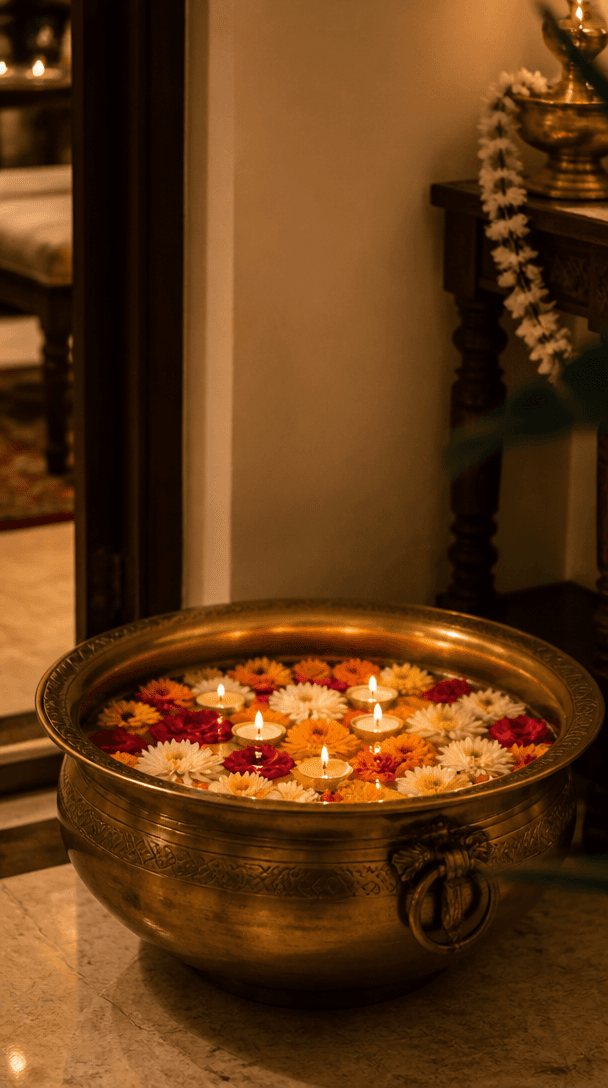
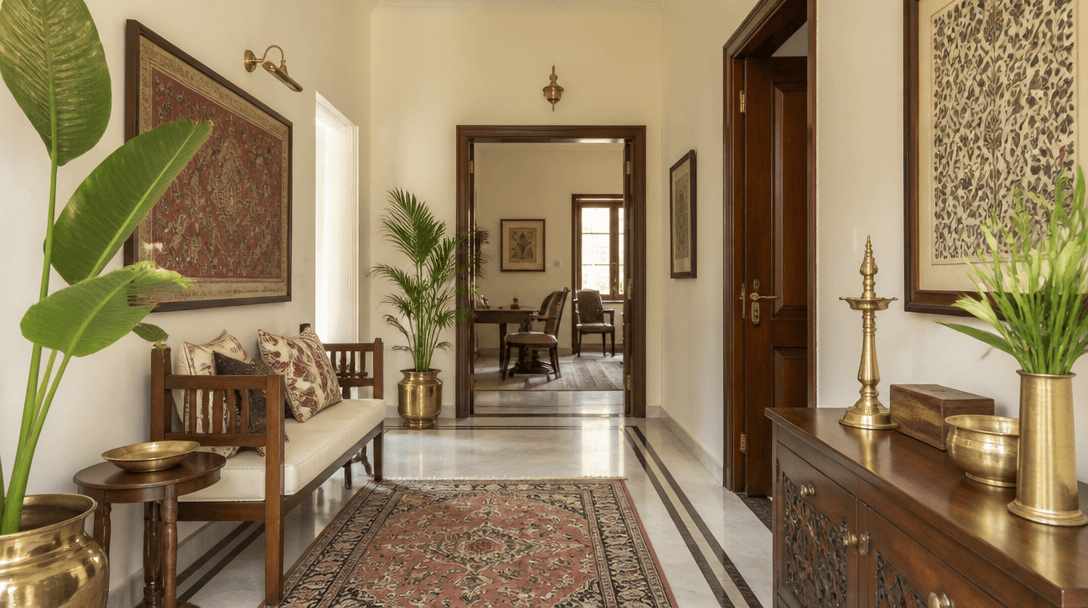
To make this simple console look like a designer piece, style it with contrasting textures. Hang a large, round mirror with a thin brass frame directly above the console. Mirrors are fantastic because they bounce light around dark corridors and immediately make the entrance feel twice as large. You can easily find these brass-rimmed Mirrors in local markets or online stores for less than ₹2,000. Underneath the mirror, place a traditional Indian brass bowl or 'urli' filled with fresh water and floating marigolds or rose petals. This adds a sense of warmth, life, and olfactory luxury that guests notice immediately.
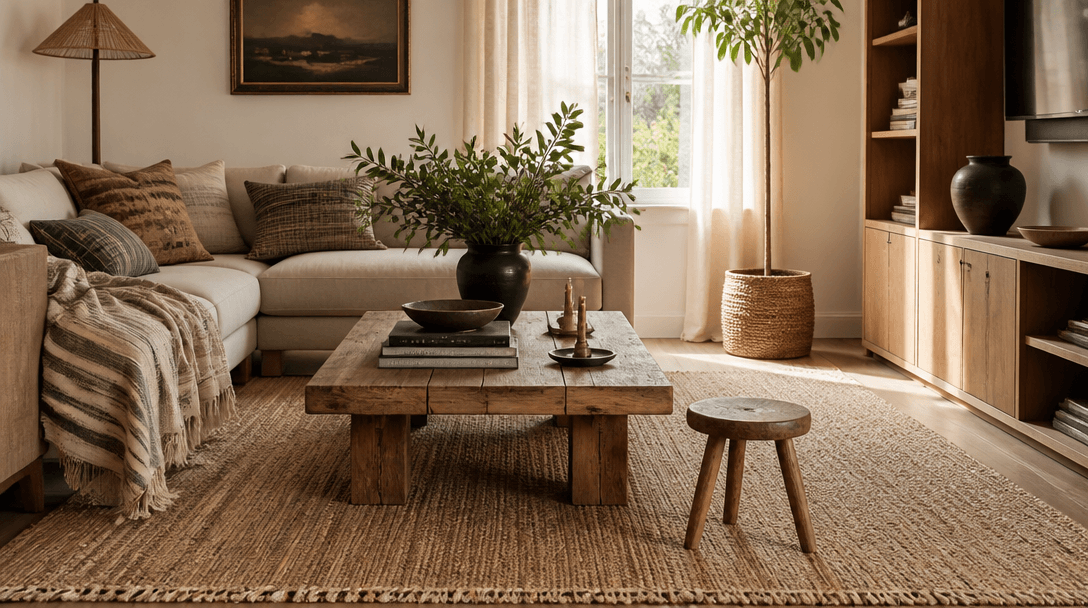
Finish the entryway look with a small, textured runner rug. Avoid cheap, thin nylon mats that slide around and look messy. Instead, opt for a hand-woven jute or cotton flat-weave rug. Jute is incredibly durable, naturally dust-resistant, and relatively inexpensive, costing around ₹1,000 to ₹1,500. The natural golden-brown texture of jute paired with the warm gleam of brass and the reflective glass of the mirror creates a welcoming, expensive-looking vignette that looks like it was styled by a professional interior designer. It feels intentional, cultured, and highly sophisticated without requiring a large financial layout.
3. Upgrade Your Lighting with Layers and Warm Temperatures
If there is one thing that instantly cheapens an otherwise beautiful Indian home, it is harsh, overhead white lighting. Tube lights and clinical cool-white LED panels (often 6500K) might be practical for finding dropped keys, but they wash out colors, highlight wall flaws, and create a cold, institutional atmosphere. To make your home look expensive, you must shift to layered, warm lighting. Look for LED bulbs and spotlights in the warm white range (2700K to 3000K) or neutral white (4000K). Warm light softens the edges of your furniture, makes your paint colors look richer, and creates a cozy, high-end hotel vibe.
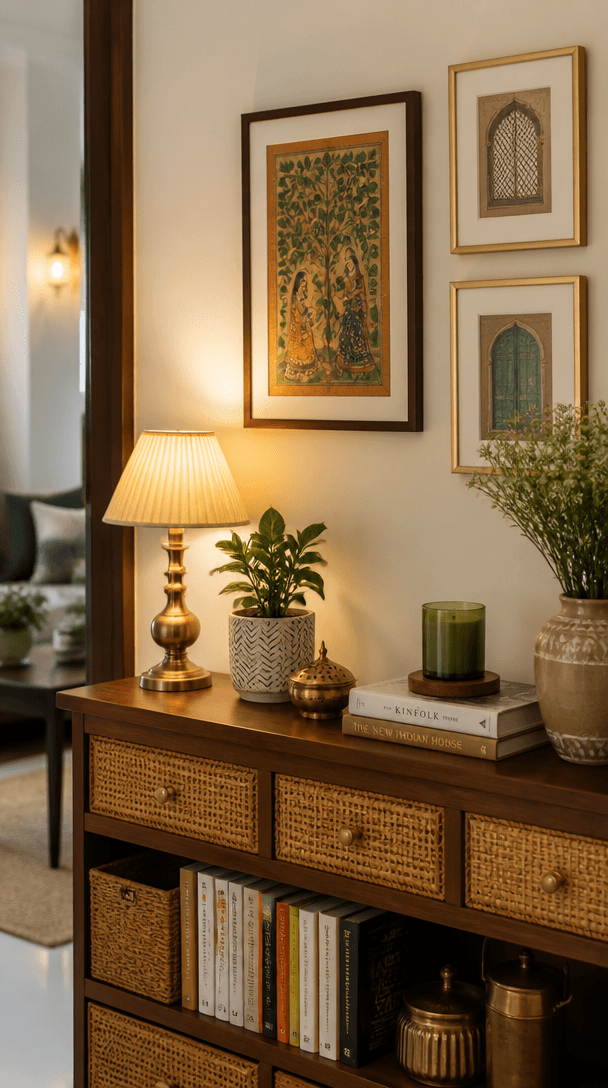
Creating layers of light is surprisingly inexpensive if you know what to buy. You do not need to rewire your entire apartment or break down your ceiling for false-ceiling spotlights. Instead, rely on floor lamps, table lamps, and wall sconces. Place a tall, slender brass floor lamp in a dark corner of your living room next to an armchair. You can find beautiful, minimalist brass lamps for around ₹3,000 to ₹4,000 on Indian e-commerce sites or at local light markets like Lohar Chawl in Mumbai or Bhagirath Palace in Delhi. Add a pair of ceramic table lamps with linen shades on your side tables to create a soft, mid-level glow.
For a modern, high-end touch, introduce wireless LED strip lights under your kitchen cabinets, inside your wardrobe, or behind your living room TV unit. These battery-operated or USB-rechargeable strip lights cost less than ₹800 per roll and are incredibly easy to install with their adhesive backing. By casting a soft, indirect glow onto your countertops or walls, they hide clutter and make your cabinetry look like custom, premium joinery. This is an absolute game-changer for rental homes where you cannot drill holes or alter the electrical wiring.
4. Elevate Your Windows with High-Hung, Cotton-Linen Curtains
Window treatments are often an afterthought, but they occupy a massive visual plane in any room. Many Indian homes feature shiny, synthetic polyester curtains that end right at the window sill or stop a few inches above the floor. This cuts your walls in half, making your ceilings look low and your space feel cramped. To get a high-end look on a budget, you must follow the golden rule of curtain hanging: hang them high and let them kiss the floor. Mount your curtain rod as close to the ceiling as possible, ideally 2 to 3 inches below the ceiling line, and let the fabric pool slightly or graze the floor.
When it comes to fabric, skip the shiny polyester and opt for natural textures like cotton, linen, or heavy cotton-canvas. These fabrics drape beautifully, filter light softly, and look much more expensive than synthetic materials. You do not need to buy imported linen; India is home to some of the finest, most affordable handloom cottons in the world. Look for solid-colored, neutral-toned cotton curtains from brands like Fabindia or local handloom cooperatives. A set of cream, beige, or soft grey cotton-linen curtains will give your living room an airy, elegant, and timeless appeal while being highly breathable and easy to wash.
If you want to add a touch of pattern, avoid loud, oversized floral prints which can look dated and cheap. Instead, look for subtle, small-scale block prints, delicate stripes, or self-textured fabrics. To make your budget curtains look custom-made, buy them in a wider width than your window demands so they look full and lush even when closed. A simple trick to achieve those neat, structured vertical folds you see in designer catalogs is to steam your curtains after hanging them and tie them loosely with a soft ribbon for a few days to 'train' the pleats.
5. Incorporate Indian Heritage and Upcycled Crafts
One of the greatest advantages of decorating a home in India is our rich heritage of local handicrafts, textiles, and vintage items. While Western homeowners pay a premium for rustic, authentic pieces, we have access to these treasures at incredibly reasonable prices. To make your home look expensive and full of character, steer clear of mass-produced plastic decor from chain stores. Instead, integrate authentic Indian craftsmanship. You can upcycle ancestral pieces or source unique items from local flea markets, weekly bazaars, or even your neighborhood raddiwala (scrap dealer).
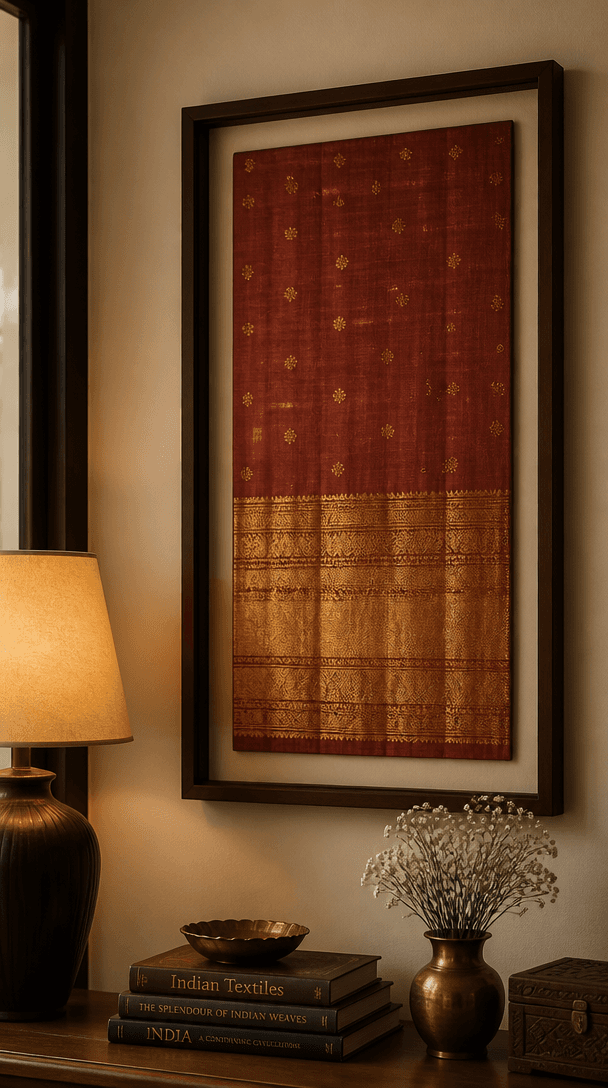
For instance, an old, weathered wooden chest or 'pitara' can be polished with a simple linseed oil or wood wax to serve as a stunning, historic coffee table in your living room. You can find these chests in antique markets like Chor Bazaar in Mumbai or Sunami Gate in Patiala for very reasonable prices if you are willing to bargain. Similarly, you can frame vintage Indian textiles, such as a piece of an old Pichwai painting, a scrap of hand-woven Ikat, or a portion of an antique silk saree that your mother no longer wears. Framing these textiles in simple, dark wooden frames with a wide white mat board instantly turns them into high-end gallery art.
Terracotta and clay pottery are other highly underrated elements that look incredibly premium when styled correctly. Instead of buying expensive ceramic vases, purchase simple, large-sized black or red clay pots from your local roadside potter. Group three pots of varying heights together in a corner, insert a few dried twigs, pampas grass, or even fresh eucalyptus leaves, and you have a stunning, organic art installation for less than ₹500. This rustic-meets-modern aesthetic is a favorite among luxury designers because it grounds the space and adds an undeniable sense of soul.
6. Smart Flooring Alternatives to Costly Italian Marble
High-end homes are almost synonymous with polished marble floors, but installing real Italian marble is incredibly expensive, labor-intensive, and impractical for most budgets. Fortunately, you can achieve a similar, ultra-luxurious look using modern ceramic or vitrified tiles. Indian brands like Kajaria, Somany, and Nitco produce stunning vitrified tiles that mimic the exact veining, gloss, and color of premium marbles like Carrara, Statuario, or Botticino. Opt for large-format tiles, such as 800x1600mm or 1200x1200mm, as they require fewer grout lines. Fewer grout lines create a seamless, continuous surface that looks incredibly spacious and expensive.
If you are renting your apartment and cannot change the existing tiles, or if you want a warmer, cozier feel underfoot, consider Stone Plastic Composite (SPC) flooring or high-quality vinyl planks. SPC flooring is a relatively new, budget-friendly option that mimics real hardwood or luxury slate. It is highly durable, water-resistant, and perfect for Indian monsoons when traditional laminate wood flooring tends to warp or swell due to high humidity. You can easily lay SPC planks directly over your existing tiled floors without damaging them. This is a brilliant, reversible solution that completely transforms a drab rental into a warm, sophisticated haven.
7. Elevate Your Furniture with Smart Hardware Upgrades
Often, the difference between a cheap piece of furniture and an expensive one lies entirely in the details, specifically the hardware. Standard modular wardrobes, kitchen cabinets, and bedside tables from budget retailers often come with generic, cheap plastic or chrome handles that scream mass-produced. A simple, highly effective trick to make your furniture look custom-built is to swap out these basic handles for high-quality, solid brass, matte black, or ceramic knobs and pulls.
You do not need to spend thousands of rupees on designer hardware stores. Visit your local hardware market (like Lohar Chawl in Mumbai, GB Road in Delhi, or even online platforms) and you will find gorgeous, heavy brass hardware for as little as ₹150 to ₹300 a piece. Replacing the generic handles on your Godrej Interio wardrobe or your basic kitchen cabinets with solid brushed brass T-bar handles instantly elevates the entire piece, giving it a bespoke, high-end look. It is a quick afternoon DIY project that yields an incredibly high return on investment, making your everyday furniture feel truly luxurious.
8. The Golden Rules of Minimalist Luxury
Finally, the ultimate, zero-cost way to make your Indian home look expensive is to practice editing and decluttering. High-end interior design relies heavily on 'negative space,' which is the empty space around and between your furniture and decor. In many Indian households, there is a natural tendency to fill every corner with souvenirs, plastic organizers, extra seating, or storage boxes. This visual noise instantly reduces the perceived value of your home, making it feel cluttered, small, and chaotic.
To counter this, adopt a 'less is more' mindset. Walk through your 2BHK or 3BHK and identify items that do not serve a functional or aesthetic purpose. Hide your daily utility items, like remote controls, chargers, and plastic bills, inside beautiful woven baskets or decorative wooden boxes. Keep your kitchen countertops as clear as possible, leaving out only a handsome wooden cutting board or a sleek olive oil dispenser. By giving your furniture and decor room to breathe, you allow each piece to stand out, creating an elegant, calm, and expensive atmosphere that money simply cannot buy.