If you have ever stood in a bustling local market in India, perhaps the chaotic lanes of Crawford Market in Mumbai, the vibrant fabric stalls of Lajpat Nagar in Delhi, or the packed avenues of Commercial Street in Bangalore, you know how overwhelming curtain shopping can feel. You are surrounded by towering bolts of fabric in every imaginable color and texture, while enthusiastic shopkeepers shake out glossy brocades, sheer cottons, and heavy velvets under bright fluorescent tube lights. It is incredibly easy to get swept away by a beautiful pattern or an attractive festive discount, only to bring the curtains home and realize they do not suit your space. Choosing the right curtains for Indian homes requires a careful balance of aesthetic charm, climatic resilience, and budget awareness. Our windows are not just architectural openings: they are our primary sources of light, ventilation, and connection to the outside world, making their treatment a critical design decision.
Our homes are uniquely beautiful, but they also present specific structural and environmental challenges that you will not find in Western interior design catalogs. We deal with persistent tropical dust, intense summer sunlight, sudden monsoon humidity, and compact urban layouts like typical 1BHK, 2BHK, and 3BHK apartments where every square foot of space matters. In this deep-dive guide, we will walk you through the practical, budget-friendly steps of choosing curtains that look premium, last for years, and do not require high-maintenance care. We want to help you transform your windows into beautiful focal points without breaking your bank account or causing endless housekeeping headaches. By the end of this article, you will have a clear, actionable plan to tackle your next home makeover with absolute confidence.
1. Climate, Dust, and the Realities of Indian Rooms
The first step in choosing curtains is acknowledging the unique environment of your home. Dust is an unavoidable daily reality in almost every Indian city, whether you live in a high-rise next to a construction site in Noida, a leafy lane in Bangalore, or a cozy apartment in Pune. Curtains act as massive, passive filters for your rooms. If you choose fabrics with highly textured surfaces, heavy embroidery, or loose, open weaves, they will trap dust particles quickly, requiring you to wash them constantly. For heavy dust zones, avoid delicate, high-maintenance fabrics that demand expensive dry cleaning, as this will quickly inflate your long-term maintenance budget. Instead, focus on smooth, tightly woven fabrics that can be shaken out easily or vacuumed in place without losing their shape.
Sunlight is another crucial factor to consider. Our tropical summers bring intense heat and harsh UV rays that can fade bright fabrics within a single season, leaving them looking dull, patchy, and worn. If your living room windows face south or west, they will bear the brunt of this fierce afternoon heat. Here, you need curtains that offer thermal insulation and UV resistance to keep your indoor spaces cool, protect your Sleepwell mattresses, and shield your furniture. On the other hand, north-facing windows receive gentle, indirect light, allowing you to use lighter, breezy fabrics that maximize natural brightness in your home without compromising on privacy or comfort.
Finally, we cannot ignore the monsoon season. In coastal areas like Mumbai, Chennai, Kochi, or Kolkata, the air becomes thick with humidity for several months of the year. Heavy, dense fabrics like velvet, chenille, or thick wool blends can absorb this moisture from the air, leading to a persistent damp smell, stubborn wrinkles, and even mold growth. If you live in a highly humid region, prioritize lightweight, breathable, and quick-drying fabrics that can withstand the rainy season without losing their fresh appeal. Polyester-cotton blends or quick-drying synthetic fabrics are perfect because they do not retain moisture and can be washed and dried easily indoors on a clothes horse.
2. Fabric Selection: Balancing Durability, Maintenance, and Budget
When it comes to curtain fabrics, your choice determines how long they will look good and how much effort you will spend maintaining them. Let us look at the most common options available in the Indian market, keeping our focus on practicality and budget friendliness. Cotton is a beloved, traditional choice that feels incredibly breathable, organic, and natural. Pure cotton curtains, especially handloom varieties, look earthy and elegant, pairing beautifully with matte wall finishes like Asian Paints Royale Matte. However, keep in mind that pure cotton is highly prone to shrinking during the first few washes and will fade relatively quickly under direct sunlight, so it is best reserved for bedrooms or dining areas with indirect light.
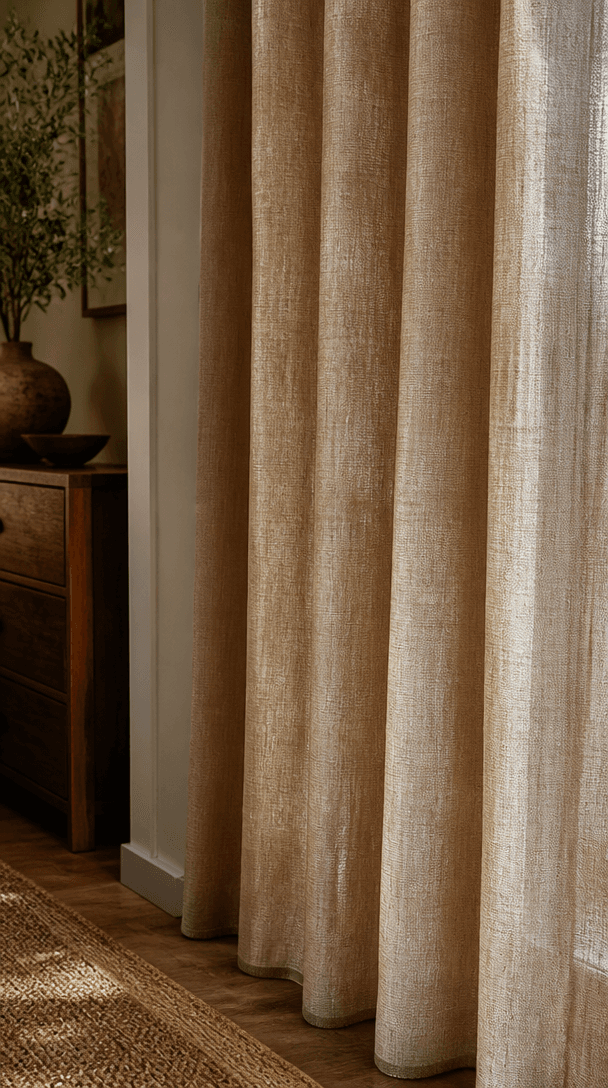
Polyester and polyester blends are the unsung heroes of the budget-conscious Indian home. While purists might hesitate to use synthetic fibers, modern polyester fabrics mimic the texture of linen, silk, and cotton incredibly well. They are highly resistant to wrinkling, do not shrink, dry within hours of washing during the monsoons, and hold their color for years under harsh sunlight. For high-traffic areas like your dining room, kids' bedroom, or kitchen, a polyester-cotton blend is often the smartest, lowest maintenance option you can choose, offering the luxurious look of cotton with the durability of synthetic fibers.
Linen curtains offer a relaxed, breezy, and luxurious look that instantly elevates any space, making it feel like a high-end coastal resort. They are perfect for creating a clean, modern aesthetic in a 3BHK living room. However, linen wrinkles very easily and requires diligent, heavy ironing after every single wash to look neat. If you love the organic look of linen but want to avoid the intense maintenance, look for linen-polyester blends. These blends offer the beautiful, slubby texture of natural linen but retain the wrinkle resistance and durability of synthetic fibers, giving you the best of both worlds at a fraction of the cost.
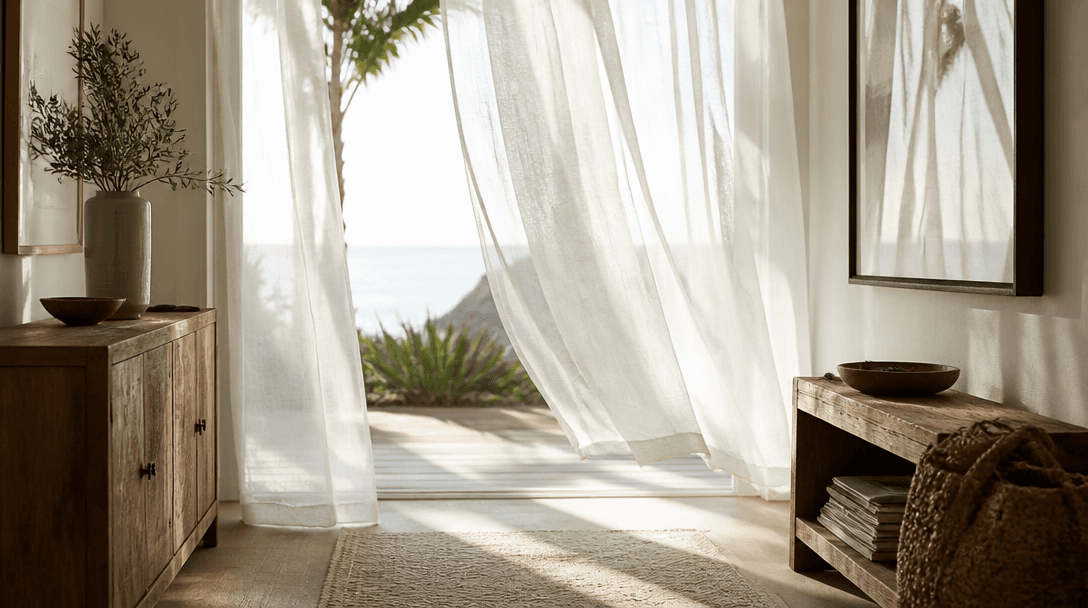
Sheer curtains are an absolute necessity for urban Indian apartments. Because our residential buildings are often built close together, privacy is a major concern. Sheer curtains, usually made of lightweight polyester voile or organza, allow soft daylight to filter into your rooms while blocking the direct view of neighbors. They make small rooms feel bright, airy, and spacious, which is essential for compact urban apartments. A popular styling trick is to pair a neutral sheer curtain with a thicker blackout curtain on a double rod, giving you ultimate control over light, heat, and privacy throughout the day while adding depth to your window styling.
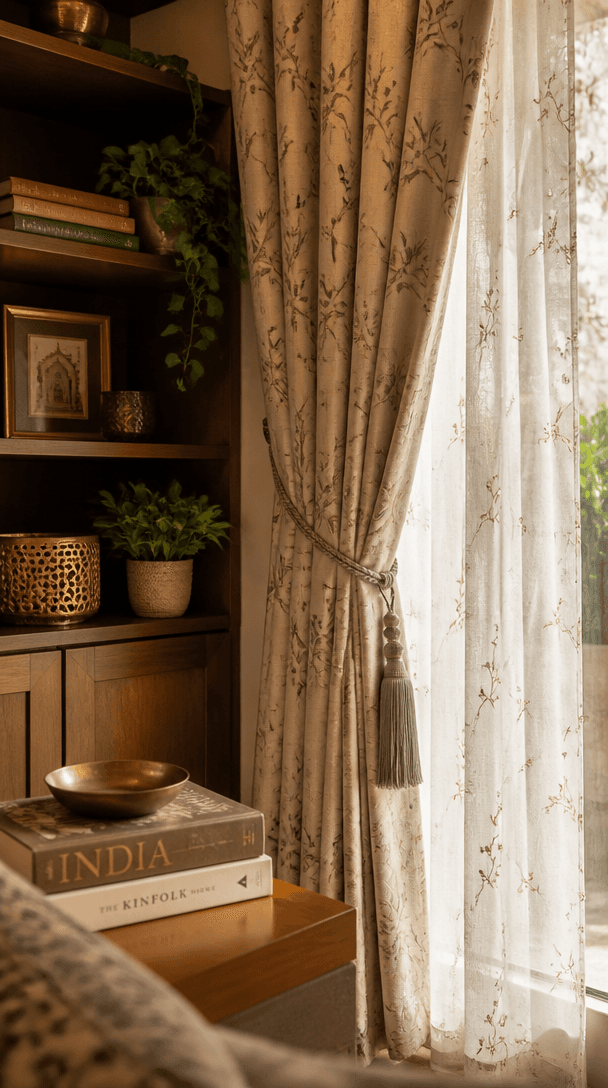
Velvet and heavy brocades bring a rich, festive grandeur to traditional Indian homes, often complementing carved wooden furniture, Kajaria floor tiles, and brass decor. However, save these heavyweights for your air-conditioned master bedroom or formal drawing-room. They are expensive, heavy to handle, trap significant amounts of dust, and must be dry-cleaned. If you are decorating on a budget, it is best to avoid these heavy fabrics for daily-use areas, or use them sparingly as side-panels rather than full-window coverage, pairing them with lighter central panels that can be washed easily at home.
3. Sizing Secrets: How to Measure and Trick the Eye
One of the most common mistakes people make is buying curtains that are too short or hanging them too low. This instantly makes a room feel cramped, cheap, and unfinished. In the Indian market, curtains generally come in three standard, ready-made lengths: 5 feet (60 inches) for windows, 7 feet (84 inches) for regular doors, and 9 feet (108 inches) for long balcony doors or high ceilings. Before you click buy online or head to a local home decor store, you must measure your windows and doors carefully using a steel measuring tape rather than a flexible tailor tape to avoid measurement errors.
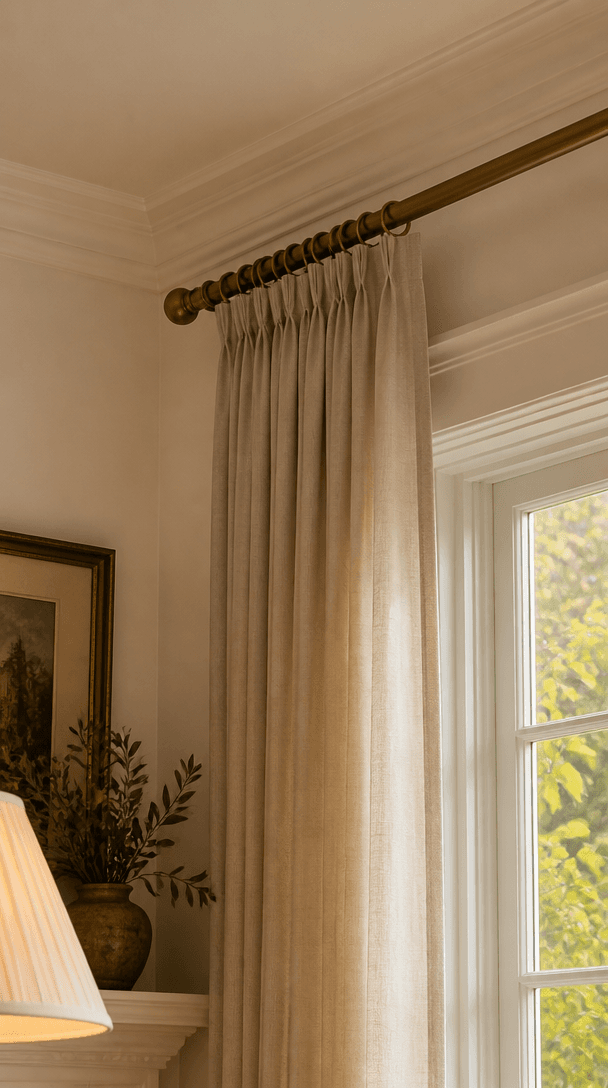
To make your 1BHK or 2BHK apartment feel spacious and grand, apply the high and wide rule. Hang your curtain rod 6 to 8 inches above the window frame, or even right below the ceiling line. This simple trick draws the eye upward, creating the illusion of height in rooms with low concrete ceilings. Additionally, extend the curtain rod 6 to 10 inches past the window frame on each side. When you pull the curtains open, they will rest against the wall rather than blocking the glass, letting in maximum light and making the window itself look much wider than it actually is.
While Western interior design blogs often show curtains beautifully pooling or puddling on the floor, this style is highly impractical for Indian homes. We sweep and mop our floors daily, often using water and liquid floor cleaners. If your curtains touch the floor, they will constantly absorb dirty water, gather dust, trap pet hair, and get stuck in your broom or vacuum cleaner. The ideal clearance for an Indian home is exactly half an inch above the floor. This clean, hovering look keeps your curtain hems clean, dry, and pristine while maintaining a tidy, modern, and hygienic appearance in every room.
Do not forget to calculate the width of your curtains correctly for a lush, gathered look. Your curtains should not look like flat bedsheets when closed. As a general rule, the total width of your curtain panels should be 2 to 2.5 times the width of your curtain rod. For example, if your window rod is 4 feet wide, your curtain panels combined should measure at least 8 to 10 feet in width. This ensures beautiful, rich folds and pleats even when the curtains are fully drawn across the window, giving your room a premium, professionally designed feel rather than a cheap, skimpy look.
4. Sourcing and Budgeting: Ready-Made versus Custom Tailoring
When decorating on a budget, you must decide between ready-made curtains and custom-tailored ones. Ready-made options are incredibly convenient and affordable. You can find excellent ready-made curtains on online portals or local home furnishing stores starting from ₹350 to ₹800 per panel. They are perfect for standard doors and windows, and they allow you to set up your home instantly. However, standard sizes do not always match modern apartment dimensions, where door heights can sometimes vary from 7.2 feet to 7.5 feet, leaving ready-made curtains looking awkwardly short, as if they are waiting for a flood.
Custom tailoring offers a perfect, bespoke fit and allows you to select your exact fabric, lining, and header style. You can visit local fabric markets and purchase material by the meter, which can range from ₹150 for basic polyester blends to ₹600 or more for premium cotton-linen fabrics. Local tailors usually charge between ₹150 to ₹350 per panel for stitching, depending on whether you want simple eyelets, pinch pleats, or back tabs. While custom stitching requires more effort and patience, it is often the best route to achieve a high-end, tailored look for your primary spaces like the living room where impressions matter most.
Let us look at a realistic budget comparison for a typical 2BHK apartment. If you choose ready-made curtains for the entire house, you might spend around ₹8,000 to ₹12,000 in total. If you choose the custom route, the fabric and tailoring costs could range from ₹18,000 to ₹25,000. To balance your budget, we highly recommend a hybrid approach. Spend a bit more on custom-tailored, premium curtains for your main living room where guests gather, and use smart, budget-friendly ready-made curtains for your guest bedroom, study, or kitchen windows where the visual impact is less critical but clean functionality is still needed.
5. Color Coordination and Styling with Indian Interiors
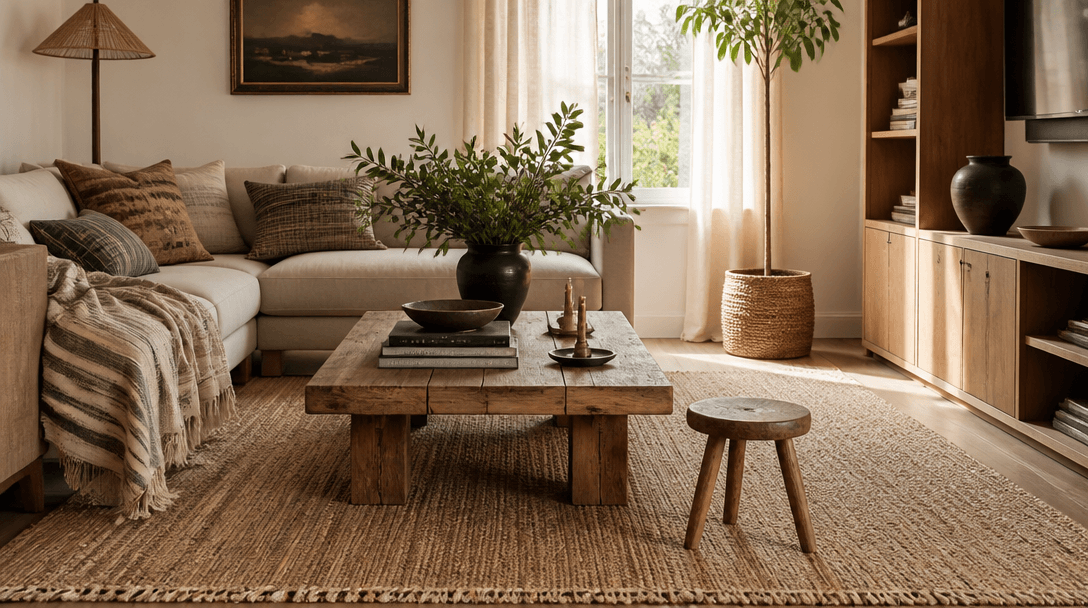
Your curtains must complement the existing elements in your room, including your wall paint, flooring, and furniture. Most Indian homes feature light-colored walls in shades of cream, off-white, or beige, often using trusted brands like Asian Paints. If your walls are neutral, you have two choices: go for a seamless, monochromatic look by selecting curtains in a similar shade, or introduce a pop of color that matches your cushions, rugs, or upholstery. A monochromatic scheme works beautifully in compact rooms as it prevents visual clutter, makes the space feel larger, and creates a serene, cohesive look that is easy on the eyes.
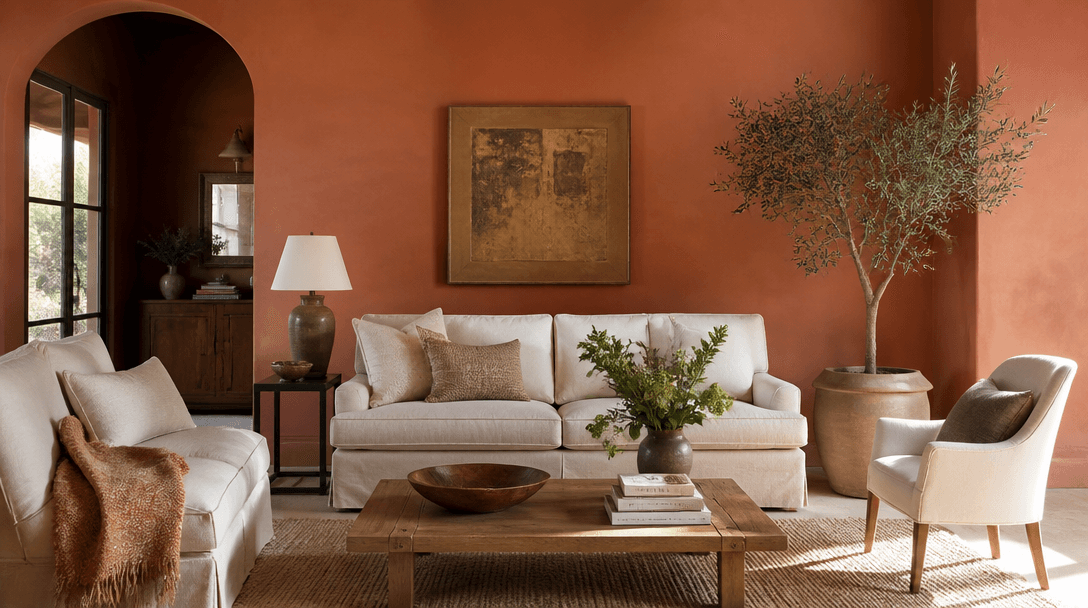
Consider your flooring as well. If your home has highly glossy, light-colored Kajaria vitrified tiles, heavy pattern-on-pattern curtains can look chaotic and dated. Instead, opt for solid colors or subtle, self-textured fabrics like jacquard or textured cotton-polyester blends. If you have warm wooden flooring or terracotta tiles, earthy tones like olive green, burnt orange, terracotta, or warm mustard will look stunning and create a cozy, inviting atmosphere. Always look at your curtain fabric samples against your floors and walls under both natural daylight and warm artificial evening lights before making your final purchase.
The choice of curtain hardware also plays a major role in the overall look and usability. Eyelet curtains, featuring metallic rings that slide directly onto a rod, are the most popular and practical choice in Indian homes. They are easy to install, glide smoothly, and are simple to remove for washing. However, if you want a cleaner, more contemporary look, consider channel tracks with hidden runners. These tracks can be mounted directly to the ceiling or behind a wooden pelmet, completely hiding the hardware and giving your room a sleek, hotel-like aesthetic that matches modern modular furniture from brands like Godrej Interio.
Finally, remember that curtains are a long-term investment in your home comfort and everyday happiness. By choosing durable fabrics, sticking to practical floor clearances, and hanging your rods high and wide, you can create a beautiful, functional space that stands up to daily dust and seasonal monsoons. Do not rush your decision: order swatches, visit local markets with your exact measurements in hand, and plan your budget carefully. With these practical tips, your home will feel incredibly stylish, cozy, and uniquely yours, reflecting your personality while respecting your hard-earned budget.