The dream of working in your pajamas is wonderful until you find yourself balancing a heavy laptop on a soft pillow, with the loud whistle of your kitchen pressure cooker going off in the background. If you live in a compact 1BHK or 2BHK apartment in cities like Mumbai, Bangalore, or Delhi, you already know that space is the ultimate luxury. Finding a quiet, dedicated zone to focus on your professional tasks without stepping on your family members or disrupting your domestic life can feel like an impossible puzzle. Most Indian apartments are built for community and family living, not necessarily for individual, quiet productivity. However, with a little planning, some smart furniture choices, and a dash of creative design, you can carve out a highly efficient work haven in even the smallest of homes.
When we think of a home office, we often picture the sprawling, sunlit studies seen on international design websites. In reality, most of us have to make do with a small corner of the master bedroom, a narrow passage leading to the dining room, or a tiny balcony that is currently filled with extra plastic stools and old suitcases. The key to successfully setting up a workspace in a small Indian apartment is not to look for a whole room, but to look for underutilized micro-spaces. We need to design a setup that is compact, highly organized, and easy to maintain in our unique climate, which often brings dust, humidity, and the occasional heavy monsoon rain. Let us dive deep into how you can achieve this transformation without losing your sanity or your security deposit.
The Space Audit: Finding Your Hidden Square Footage
Before you rush online to buy a new desk, you need to conduct a thorough audit of your apartment. Grab a measuring tape and look at your home with fresh eyes. In typical Indian homes, we tend to push all our heavy wooden furniture against the walls, leaving the center of the room empty but the perimeter cluttered. This traditional layout often leaves small, awkward gaps that are perfect for a compact home office. Look for niches, alcoves, or even the space directly beneath a window. A window sill that is at least thirty inches high can easily double as a desk support if you place a slim console table right against it, giving you natural light and a pleasant view during long video calls.
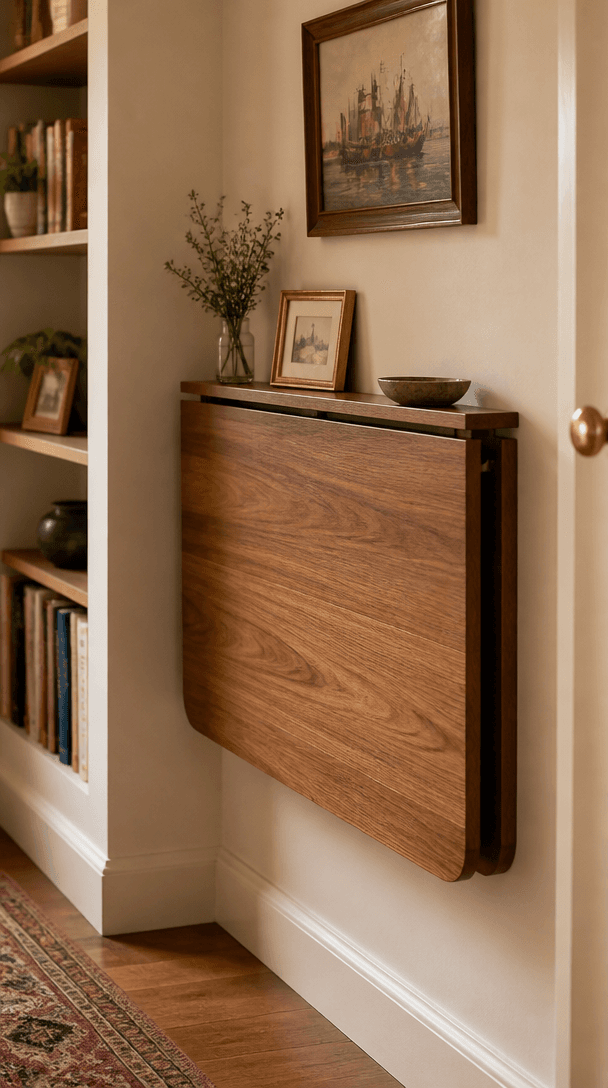
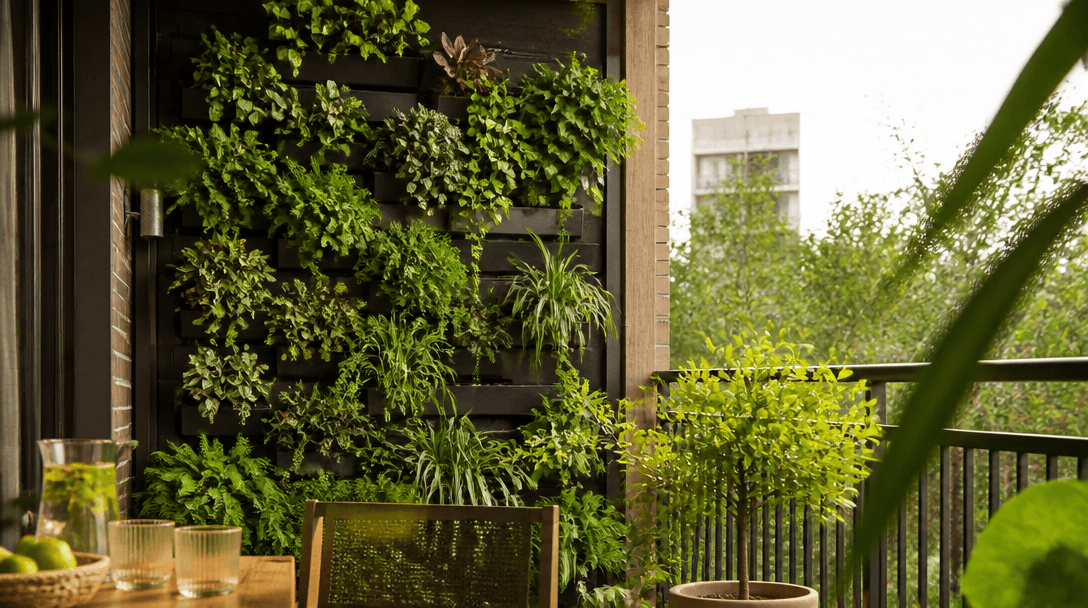
Another often overlooked area is the end of a long corridor or the passage leading to your bedrooms. These areas are usually dead zones that only experience foot traffic. By choosing a slim desk with a depth of no more than eighteen inches, you can easily set up a workstation that does not block the pathway. If you live in a rented 2BHK, check the space beside your wardrobe. Often, builders leave a gap of two to three feet between the wardrobe and the bedroom door. This is an ideal spot to slide in a custom wall shelf or a narrow ladder desk. Even your balcony, if it is enclosed or protected by sliding glass windows, can be converted into a refreshing, plant filled work nook that keeps you connected to the outdoors while you work.
Choosing the Right Furniture: Smart, Flexible, and Space Saving
In a small apartment, heavy, traditional wooden desks are your worst enemy. They are difficult to move, block visual paths, and make rooms feel instantly smaller. Instead, look for modular, lightweight, or multi-functional furniture. Brands like Godrej Interio offer excellent, compact steel frame desks that are sturdy yet visually light. If your budget is tight, say around ₹3,000 to ₹6,000, look for a folding desk that can be packed flat and slipped under your bed or behind a sofa when your workday ends. This is particularly useful for those who live in shared PG accommodations or tiny studio apartments where a permanent desk would eat up precious living space.
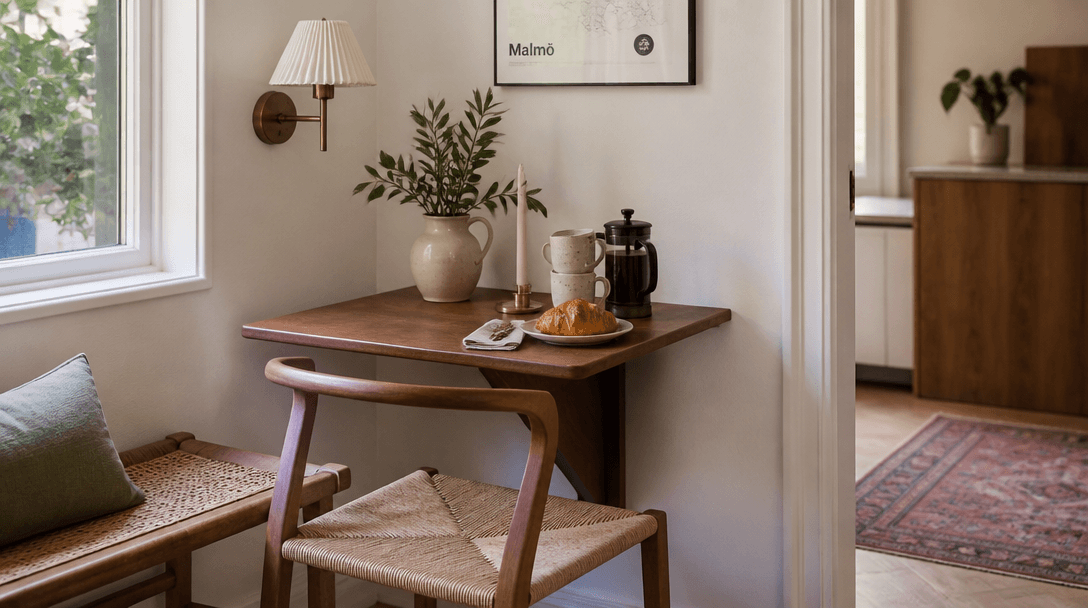
If you prefer a permanent setup, consider a wall-mounted desk. A drop-leaf wall table is a game-changer for small homes. It mounts directly to your wall and can be folded down flat against the plaster when not in use, projecting just a few inches into the room. When you need to work, you simply lift the wooden panel and lock it into place. You can pair this with a folding chair or a sleek stool that slides completely underneath. When choosing materials, opt for light-colored laminates or engineered wood rather than dark, heavy mahogany or teak. Light wood finishes reflect natural light, making your small corner feel airy, bright, and less claustrophobic.
The Power of the Local Carpenter
While ready-made furniture is convenient, nothing beats a custom solution tailored to your exact apartment dimensions. If you have an awkward corner or a pillar jutting out of your wall, a local carpenter can create a bespoke floating desk for you. You can purchase a high-quality sheet of Boiling Water Resistant (BWR) plywood from your local hardware store, finish it with a sleek, light colored laminate, and mount it to the wall using heavy duty steel brackets. This custom solution often costs less than ₹5,000 and fits your space like a glove, ensuring that not a single millimeter of your room goes to waste.
Zoning Your Space Without Building Walls
One of the biggest psychological challenges of working from home is the blending of your professional and personal lives. When your desk is right next to your bed, it can be incredibly hard to switch off your brain at night. To fix this, you need to create visual boundaries. You do not need to build actual brick walls or install expensive glass partitions to do this. A simple and beautiful way to define your work zone is through color. You can paint a small section of your wall, just the width of your desk, in a contrasting, soothing color. Use a high-quality paint like Asian Paints Royale Play or a calming sage green from their range to create a distinct color block. This visual cue tells your brain that when you are sitting in front of the green wall, you are at work, and when you step away, you are back home.
Another brilliant way to zone your space is by using open bookshelves as room dividers. If your workspace is in the living room, place a tall, open-backed wooden bookshelf perpendicular to the wall. This creates a cozy, private cubicle for your desk while still allowing light and air to flow through the room. You can style the shelves with indoor plants like pothos or snake plants, which thrive in Indian indoor conditions, alongside your reference books and files. For a highly flexible solution, consider lightweight, three-panel wooden partition screens. You can easily fold them up and store them away when you have guests over for Sunday lunch, instantly restoring your living room to its original social layout.
Combating the Indian Climate: Dust, Humidity, and Monsoon Care
Designing a home office in India requires you to think about practical environmental factors that designers in temperate climates rarely have to face. Dust is a constant, daily battle in almost every Indian city. Open shelving might look gorgeous in photographs, but in reality, it becomes a nightmare to clean every single morning. If you do not want your expensive laptop, keyboard, and files covered in a layer of grey grime, opt for closed storage solutions. Choose small cabinets with glass doors or use colorful, lidded plastic organizers that can be wiped clean with a damp microfiber cloth in seconds.
Monsoon humidity is another critical factor to consider, especially if you live in coastal regions like Mumbai, Chennai, or Kolkata. Cheap particle board furniture tends to absorb moisture from the air, swelling up and falling apart within a season or two. This is why investing in BWR plywood or solid wood is highly recommended. To protect your legs and feet during the humid summer and rainy months, avoid heavy, thick wool carpets under your desk. Instead, lay down a flat-weave cotton durrie or a small jute rug. Jute is highly breathable, handles moisture well, and is incredibly easy to shake out and clean, keeping your workspace smelling fresh and looking tidy throughout the year.
Ergonomics: Protecting Your Back and Neck
Never sacrifice your physical health for aesthetics. While a vintage wooden dining chair might look beautiful next to your desk, sitting on it for eight hours a day will eventually lead to severe back pain. If you cannot afford or do not have space for a bulky, high-back ergonomic office chair, you can upgrade an existing chair with smart accessories. Look for high density memory foam seat cushions and lumbar support pads. Brands like Sleepwell make excellent, orthopedically designed cushions that can turn a basic wooden or metal chair into a comfortable, supportive seat that keeps your spine aligned during long coding sessions or client calls.
Lighting and Wire Management: The Unsung Heroes
An office is only as good as its lighting. In many Indian apartments, builder-provided overhead lighting consists of a single, bright fluorescent tube light or a cool white LED bulb placed directly behind your seating area. This setup is a recipe for eye strain, as your body casts a harsh shadow over your desk and keyboard. To fix this, try to place your desk parallel to a window so that natural light falls on your workspace from the side. For evening work, invest in a good quality, adjustable desk lamp. Use a warm white LED bulb (around 3000K to 4000K) to create a soft, inviting glow that does not feel clinical or harsh on your eyes.
Wire management is another crucial element that can make or break a small space. A tangled mess of black wires hanging from your desk not only looks incredibly messy but also acts as a magnet for dust and hair, making it difficult for your domestic help to sweep or mop the floor. Use self-adhesive cable clips to run your wires along the underside of your desk or along the legs of your table. You can buy a cheap, plastic cable organizer box to hide your spike guard, charger bricks, and excess cords. This simple step takes less than half an hour but instantly makes your compact home office look incredibly sleek, clean, and professional.
Smart Storage Hacks for Tight Spaces
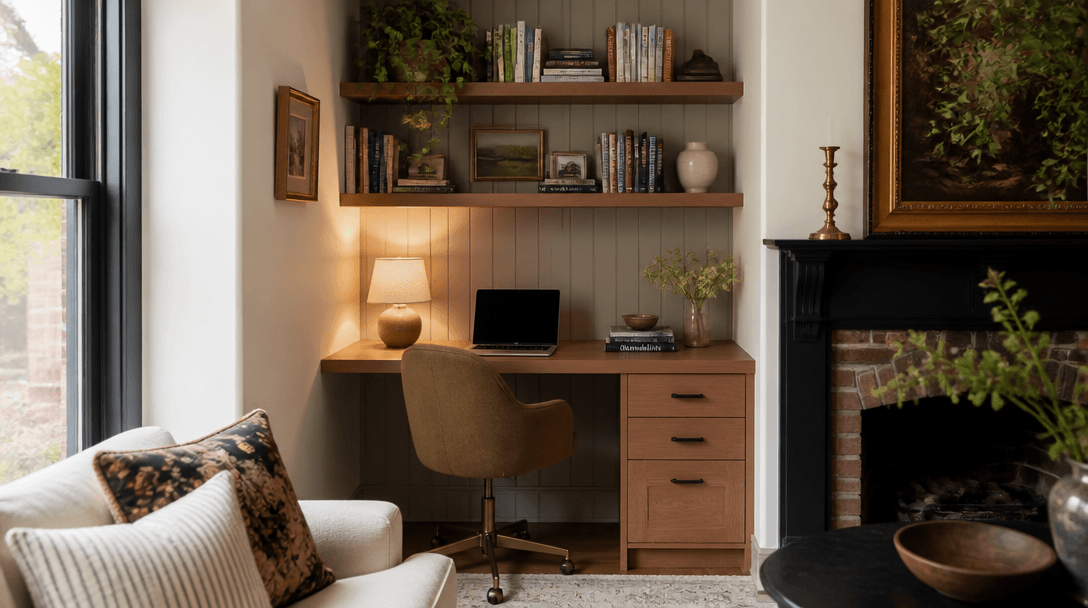
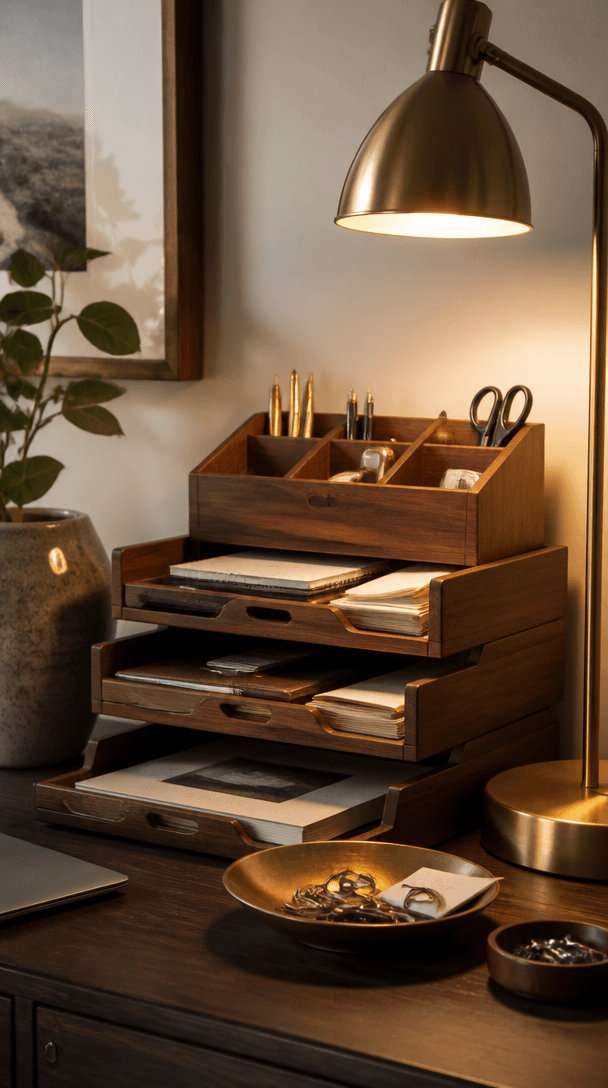
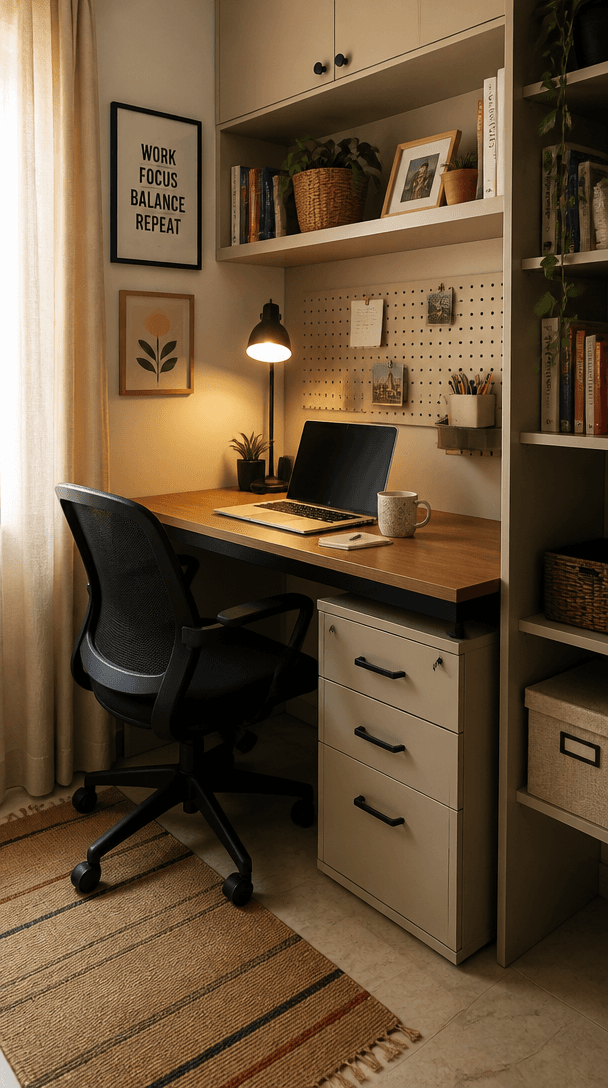
When floor space is at a premium, the only way to go is up. Vertical space is the most underutilized asset in small Indian apartments. Instead of letting your walls sit empty, install two or three floating wooden shelves above your monitor screen. You can use these shelves to store your heavy binders, printer paper, and stationary boxes. To keep the shelves looking neat, use matching storage baskets made of wicker or fabric. This keeps your essential items within arm's reach while keeping your actual desk surface completely clear and clutter free.
If you are renting and your landlord has strict rules against drilling holes in the walls, do not despair. You can use a freestanding pegboard leaning against the wall or a metal grid panel that hooks onto the back of your room door. These modular storage systems allow you to hang small baskets, scissor holders, and notes using simple S-hooks and clips, without causing any damage to the property. Another brilliant rental friendly hack is a slim, three-tiered metal utility cart on wheels. You can load it up with your laptop charger, notebooks, planner, and daily stationery, and wheel it right next to your dining table when you start work. Once your day is done, simply wheel the cart back into a kitchen corner or behind a curtain, completely hiding your office from view.
Making It Personal: Staying Motivated in a Small Nook
Finally, remember that this is your personal space, and it should reflect your unique personality and style. Just because your office is tiny does not mean it has to feel cold or sterile. Add a few small touches that make you smile when you sit down to work. Hang a small, framed motivational print, place a tiny brass pot with a money plant on your desk, or use a beautiful, hand-woven ceramic mug from a local Indian artisan to hold your favorite pens. These small, inexpensive design details add warmth and texture to your workspace, turning it from a mere utility desk into a personal sanctuary where you actually look forward to spending time.
Fitting a home office into a compact Indian apartment is all about compromise, creativity, and clever design. By auditing your space, choosing flexible furniture, protecting your health with good ergonomics, and using simple visual zoning tricks, you can create a beautiful, highly productive workspace that respects your home, your budget, and your lifestyle. Do not let a lack of square footage hold you back from achieving your professional goals. Start with a simple corner, make a few conscious changes, and watch how your compact apartment transforms into a powerhouse of productivity and style.