If you have balanced a plate of dal chawal on your knees while sitting on your sofa, you are not alone. In Indian cities like Mumbai, Bengaluru, and Pune, the traditional dining room is becoming a luxury of the past. As builders optimize compact 1BHK and 2BHK layouts, the dining area is often the first casualty. However, eating every meal on your sofa is bad for posture and robs you of the comforting ritual of eating together. You do not need a massive room to enjoy a proper family dinner. With smart planning, you can design a beautiful dining space in any compact home.
Designing a compact home requires a mindset shift. Instead of squeezing a traditional six-seater teakwood table into your tight living area, ask yourself how a functional eating spot can co-exist with your existing setup. In this practical guide, we will walk you through real strategies to carve out a dining zone from thin air. We will explore smart furniture that folds away, simple color tricks to visually separate your eating space, and ways to handle local Indian challenges like daily dust, rental rules, and monsoon humidity. Grab a cup of chai and let us re-imagine your space together.
1. The Hunt for Dead Space: Where to Carve Out Your Dining Zone
The first step in creating a dining space is auditing your floor plan. When you lack a dedicated dining room, look for underutilized zones. A common place to start is the transition area between your living room and kitchen entrance. In many standard 2BHK layouts, this transition area is a blank wall or a passage that remains empty for foot traffic. Rather than leaving this zone bare, utilize its horizontal footprint. A slim console table placed flush against this wall serves as an elegant display during the day and easily doubles as a breakfast counter when pulled out slightly.
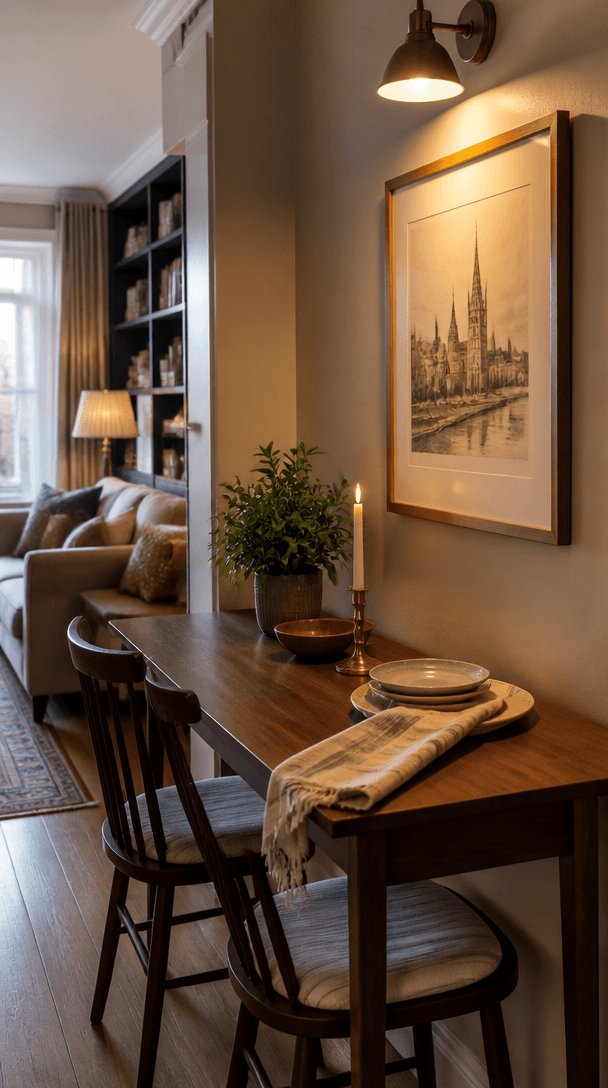
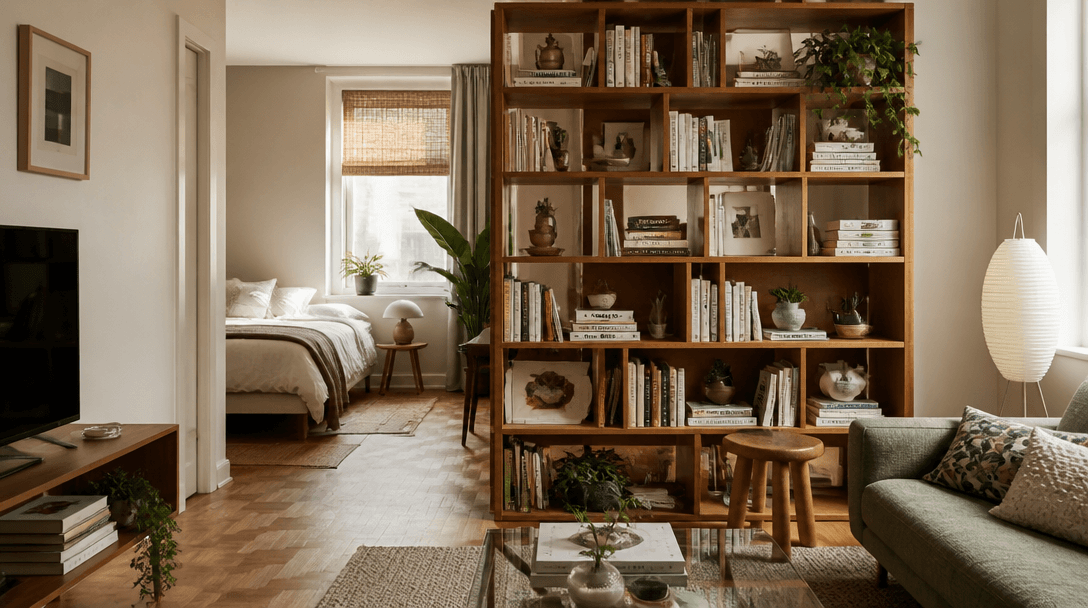
Another brilliant but underutilized area is the space directly behind your main living room sofa. Most of us instinctively push our sofas flush against the wall, but floating your sofa even two feet away can open up incredible design opportunities. By placing a long, narrow, bar-height counter directly behind the backrest of your sofa and pairing it with sleek bar stools, you create an instant eating spot. This arrangement is perfect for watching television while you eat, eliminating the physical strain of bending over a low coffee table while acting as a natural room divider.
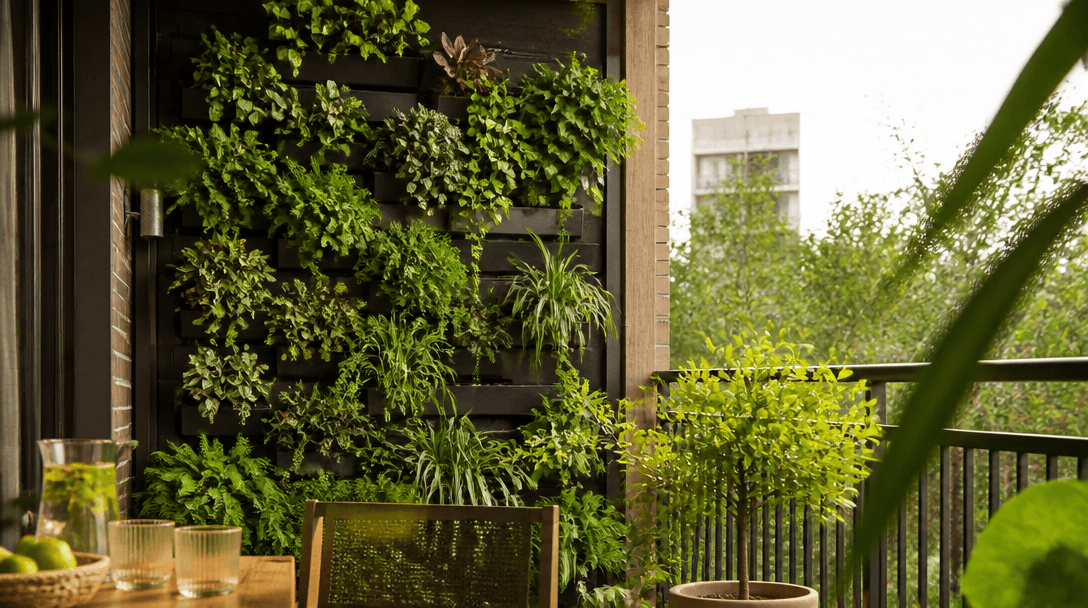
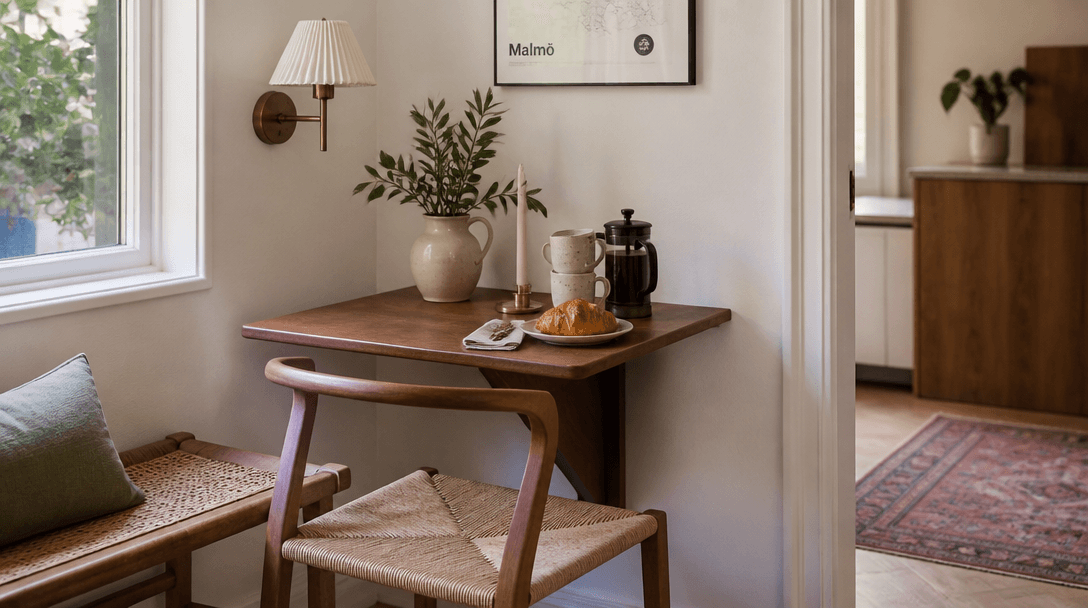
Do not overlook your entry foyer or empty corners in your living room. A dead corner can easily be transformed into a cozy breakfast nook with a small round table and two compact, armless chairs. Round tables are exceptionally well-suited for tight layouts because they have a smaller visual footprint and lack sharp corners, making it safer to navigate around them. If you have a wide balcony attached to your living area, that outdoor space can also be converted into a beautiful semi-outdoor dining zone, provided you choose durable materials that can withstand local weather.
2. High-Impact Furniture Solutions for Tight Spaces
The Wall-Mounted Drop-Leaf Table
When floor space is at a premium, your walls are your most reliable asset. A wall-mounted drop-leaf table is undoubtedly one of the most practical and budget-friendly solutions for compact 1BHK apartments and studio homes. These tables are securely mounted directly onto your wall and feature a sturdy, hinged top surface that can be folded down flat when not in use. When it is time to eat, you simply lift the tabletop and secure the supporting bracket. You can find excellent ready-made options online or get one custom-designed by a local carpenter using sturdy plywood for anywhere between ₹3,500 and ₹8,000.
The Smart Extendable Dining Table
If you love hosting friends for weekend dinners but do not want a massive table taking up space during the workweek, an extendable dining table is the ultimate compromise. Trusted Indian brands like Godrej Interio offer sleek extendable designs that look like modest four-seater tables but can easily transition into a spacious six-seater dining table using smooth internal leaf extensions. When shopping, look for durable butterfly mechanisms that are easy to operate single-handedly. Make sure that the frame is constructed from high-quality engineered wood or rust-resistant, powder-coated metal. This is crucial for safeguarding your furniture against the high humidity of the Indian monsoon, which can cause untreated wood to warp or swell over time.
The Multifunctional Console Table
A multifunctional console table is a design secret that works wonders in narrow living rooms. In its default state, a console table is very shallow, usually measuring only twelve to fifteen inches in depth, making it perfect for placing in an entryway foyer or right behind a sofa to display family photos and small plants. However, many smart designs feature a flip-top mechanism. By simply rotating the top panel and unfolding it like a book, the depth of the table doubles instantly, turning a decorative piece into a spacious, stable dining table for four.
3. Visual Zoning: How to Separate Your Dining Area Without Walls
Create a Focal Point with Color
When integrating a dining area into your living room, the space can easily feel cluttered if all design elements blend together. To prevent this, you need to use clear cues to define your dining zone. One of the easiest and most budget-friendly ways to achieve this is through strategic color blocking. Painting the wall behind your dining table in a contrasting accent color creates a distinct zone that feels like a separate room. For example, you could opt for warm, appetizing shades like deep terracotta, rich mustard yellow, or a sophisticated forest green from the popular Asian Paints Royale range. This simple paint project, easily completed over a weekend for less than ₹6,000, establishes a beautiful boundary and adds a wonderful layer of depth.
Anchor the Space with Lighting and Rugs
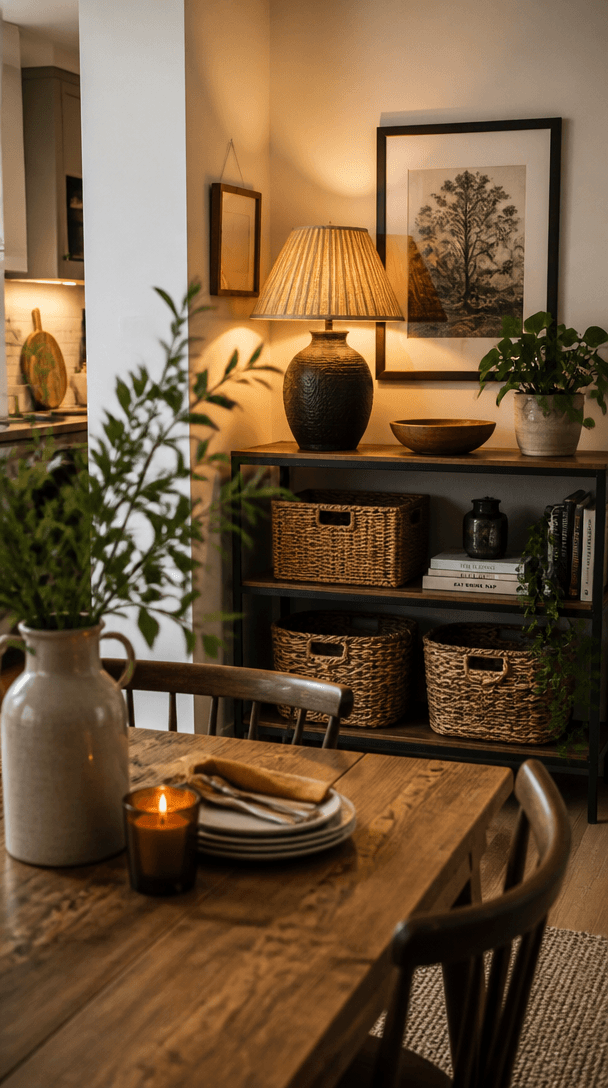
Lighting is another powerful tool for creating visual boundaries. Hanging a low-profile pendant light or a beautiful, lightweight wicker chandelier directly over your dining table immediately signals that this is a specific, purposeful area. Opt for warm yellow LED bulbs (around 2700K to 3000K) to create an inviting, restaurant-style ambiance for your meals. If you are living in a rented apartment and cannot easily install new ceiling wiring, do not worry: you can use a stylish, plug-in pendant light featuring a long fabric cord. Simply drape the cord over a sturdy wall bracket or an adhesive ceiling hook to achieve the exact same gorgeous look without damaging the rental property.
To complete this zoning effect, anchor your dining setup with a durable flat-weave rug or a traditional Indian cotton dhurrie placed directly under your table. However, in the Indian context, you must be practical about floor textiles. Indian homes are naturally prone to daily dust, and food spills from rich curries can quickly ruin delicate fabrics. Avoid high-pile carpets under your dining table. Instead, opt for washable cotton dhurries, flat-woven natural jute rugs, or modern outdoor polypropylene rugs that can be effortlessly wiped down with a damp cloth when spills inevitably happen.
4. Navigating Indian Realities: Dust, Monsoons, and Rental Rules
Decorating a compact home in India comes with a highly unique set of local challenges that Western design blogs rarely address. The first major hurdle is rental contract restrictions. If you live in a rented 1BHK or 2BHK apartment in crowded cities like Mumbai, Gurugram, or Pune, your landlord likely has strict rules against drilling heavy anchor bolts into the walls or painting bright accent murals. If you find yourself in this situation, do not despair. Instead of drilling a heavy wall table, look for smart, freestanding, collapsible folding tables that can be easily tucked away into the slim gap between your wardrobe and the wall. You can also make excellent use of damage-free adhesive hooks to hang lightweight woven placemats or art prints to style your dining nook beautifully without risking your security deposit.
The second major local challenge is the weather, specifically the high-humidity Indian monsoon season. During the heavy rains, solid wood frames expand, and cheap particle board furniture can quickly absorb moisture, swell up, and literally crumble from within. When choosing furniture pieces for your compact dining space, always prioritize durable, weather-resistant materials. If you love the warmth of natural wood, ensure it is high-quality, fully seasoned solid wood like teak or sheesham, or opt for premium boiling-water-resistant marine-grade plywood finished with high-quality laminates. Alternatively, look for modern industrial designs that combine powder-coated metal frames with sleek tempered glass tops, which are incredibly easy to clean and impervious to seasonal humidity.
We also have to talk about the endless battle against daily urban dust. Open windows are wonderful for letting in cool breezes, but they also bring in thick layers of fine dust on a daily basis. This means that any dining furniture featuring highly intricate carvings, deep grooves, or delicate open cane weaves will require constant, incredibly tedious cleaning. For a low-maintenance, practical small dining space, choose furniture with clean, minimalist lines and easy-to-clean surfaces that can be wiped completely spotless in a single, simple swipe. If you absolutely love the organic look of natural cane or rattan, which is incredibly trendy and lightweight, look for high-quality pieces where the woven details are vertical rather than horizontal, as vertical surfaces naturally trap significantly less dust over the course of the week.
5. Seating Strategies for Compact Dining
The single biggest mistake most homeowners make when setting up a dining space in a small home is choosing the wrong, overly bulky seating options. Standard dining chairs with high, solid backs and thick armrests act like visual walls in a room, completely blocking the line of sight across your living area and making the entire apartment feel cramped and cluttered. Instead, look for low-profile chairs with open, delicate spindle backs, mid-century modern wire-frame chairs, or transparent acrylic ghost chairs that virtually disappear into the background. Better yet, opt for highly practical nesting stools or lightweight, cushioned Ottomans that can be completely tucked away underneath your dining table when they are not in use. This simple layout trick keeps your main walkways and high-traffic pathways completely clear of physical obstacles during the day.
Another fantastic, highly practical seating option is the classic dining bench. A sturdy wooden bench can easily seat two or three people comfortably, making it an incredibly efficient choice for families or those who love to host guests. When your meal is over, the bench can be slid completely out of sight underneath the dining table. Alternatively, you can invest in or custom-build a smart storage bench featuring a convenient lift-up seat cushion. This brilliant double-duty solution gives your guests a highly comfortable place to sit while providing your household with an incredibly useful, spacious storage chest. This is the perfect place to tuck away extra bedsheets, monsoon umbrellas, seasonal blankets, or heavy, festive brass cookware that you only use occasionally. You can throw a few vibrant, block-printed cushions on top to add a pop of color and physical comfort.
6. Styling Your New Dining Nook to Feel Premium
Just because your newly created dining space is small does not mean it cannot look like a highly luxurious, designer-worthy retreat. The key to high-end, successful small-space design lies entirely in the fine details. Start your styling journey by hanging a large, elegant mirror on the wall directly next to or behind your dining table. Mirrors are classic, time-tested interior design tricks for a very good reason: they instantly double the visual depth of any room and beautifully reflect both natural daylight and ambient lamplight, making your compact dining nook feel incredibly bright, open, and spacious. For a truly sophisticated look, choose a mirror with a simple, thin frame made of brushed brass, matte black metal, or natural polished wood to match the rest of your home decor style.
On the dining table itself, keep your everyday styling highly minimal, intentional, and clutter-free. A cluttered tabletop is the absolute enemy of a small home, making the entire living room feel chaotic. Instead of a massive centerpiece, use a small, elegant ceramic vase featuring a single, fresh monstera leaf, a few sprigs of green eucalyptus, or a couple of fresh flowers. This simple touch adds a beautiful element of natural life and vibrant color without taking up precious plate space during meals. For everyday family use, dress your table with elegant, hand-woven cotton placemats and a simple table runner rather than a full, heavy tablecloth. Heavy tablecloths can look incredibly overwhelming and bulky in a small room, whereas a runner protects your tabletop from scratches and heat while still letting the beautiful, natural texture of the wood or stone shine through.
Finally, think carefully about how you store your daily dining essentials, plates, and cutlery. If you do not have the floor space to accommodate a bulky, traditional crockery cabinet, look for a slim, wall-mounted plate rack, or install a couple of stylish, heavy-duty floating shelves directly above your dining table. This allows you to display your favorite ceramic mugs, artisanal ceramic bowls, and traditional brass dinnerware proudly. This clever solution keeps your table surface completely clear for meals while beautifully transforming your everyday, functional kitchenware into a highly personal, artistic design statement on your living room wall, adding character without consuming any precious floor area.
Creating a highly functional, deeply welcoming, and beautiful dining space when your home has no dedicated dining room is not about compromising on your lifestyle: it is about celebrating smart, highly intentional design. By looking at your current layout with fresh, creative eyes, identifying underutilized corners, and investing in versatile, multi-purpose furniture pieces, you can easily create a warm and cozy dining zone where your family can gather comfortably to share delicious meals and build lasting memories together. Remember, a home is never defined by its strict square footage, but by how thoughtfully and lovingly you design it to serve your daily life. Start small, experiment with these practical ideas, and watch your compact living area transform into a functional haven that you truly love coming home to every single day.