Let us admit a common home design truth: when we buy or rent a flat in India, whether it is a cozy 1BHK in Mumbai, a 2BHK in Bengaluru, or a 3BHK in Delhi NCR, the entry hallway is usually an afterthought. Real estate developers tend to prioritize the square footage of the living room and bedrooms, leaving us with a long, narrow, and windowless passage right at the entrance. This is the very first space you encounter when you open your heavy main door after an exhausting day of work and commuting. Instead of feeling a sense of relief, safety, and warmth, you are often greeted by a dark, claustrophobic tunnel cluttered with random footwear, wet umbrellas, courier boxes, and dust. It does not have to be this way, even if you are renting and cannot break down any walls.
Turning a cramped, dim entryway into a bright, inviting space is one of the most rewarding home improvement projects you can undertake. It requires a thoughtful blend of visual tricks, smart lighting choices, functional space-saving furniture, and a touch of styling. You do not need a massive budget to achieve this transformation. With some clever planning, a few weekend DIY projects, and some high-impact decor pieces, you can turn your neglected hallway into a beautiful transition zone that sets the tone for the rest of your home. Let us dive into the practical, step-by-step strategies that actually work for Indian homes, taking into account our unique space constraints, heavy dust, and monsoon storage needs.
1. The Power of Paint: Choosing the Right Base
When you are dealing with a hallway that gets absolutely zero natural light, your paint color choice is your most powerful tool. The automatic response for many homeowners is to paint the walls bright, clinical white in hopes of making it look larger. However, stark white in a dark space can often look dull, grey, and surprisingly gloomy because there is no natural sunlight to bounce off it. Instead, you want to opt for soft, warm-toned neutrals that reflect light without feeling sterile. Think of cream, ivory, soft beige, or pale pastel shades that have a warm, welcoming undertone.
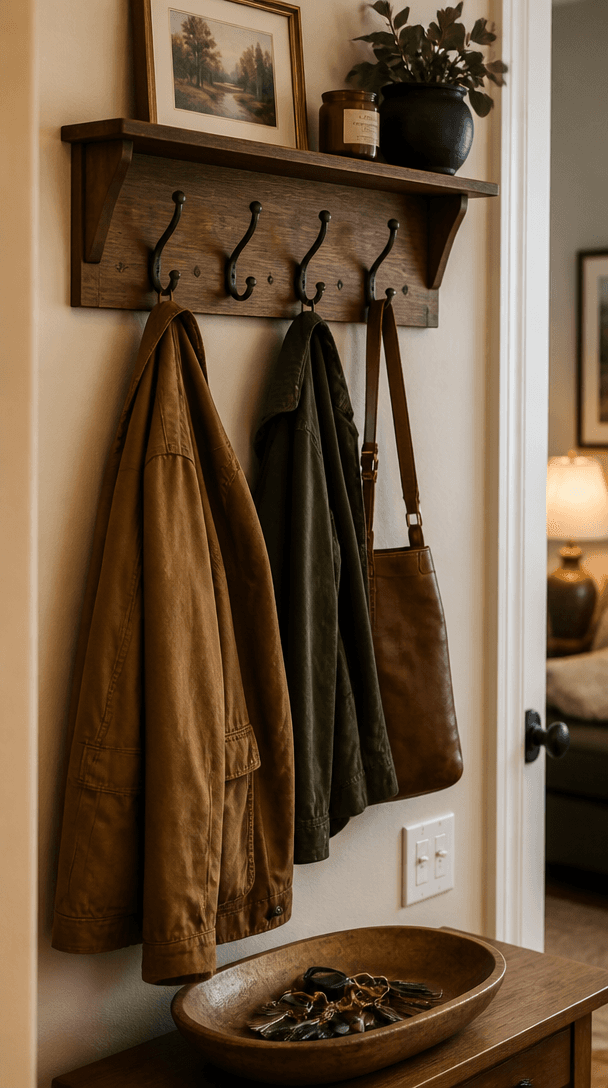
In the Indian context, durability is just as important as aesthetics. Hallways are high-traffic areas where school bags scrape against walls, hands touch the surfaces as people put on shoes, and monsoon dampness can cause peeling. For this reason, look at premium washable emulsions like Asian Paints Royale Shyne or Berger Easy Clean. These paints have a subtle sheen that reflects light beautifully while allowing you to wipe away muddy finger stains, oil, or dust with a damp cloth. If you want to experiment with color, try a soft peach, a very pale sage green, or a warm linen shade. To make the hallway feel taller, paint your ceiling a shade lighter than your walls, or use a pure flat white on the ceiling to create an illusion of vertical height.
2. Lighting Design for Windowless Passages
No amount of light-colored paint can save a dark hallway if your lighting is poor. Typically, Indian apartments come with a single, sad yellow bulb or a basic tube light placed right above the entrance door. This creates harsh shadows and makes the far end of the passage look like a dark, uninviting cave. To fix this, you need a layered lighting scheme. Layering simply means using different types of light sources to eliminate dark corners and create warmth.
Start by upgrading your ambient overhead lighting. If you have a false ceiling, installing dimmable LED profile lights or recessed spotlights is an excellent option. Space them evenly along the length of the hallway so there are no dark pockets. If you do not have a false ceiling and are renting, do not worry. You can install a sleek track-light system directly onto your ceiling junction box. Track lights are fantastic because you can angle the individual spotlight heads toward the walls, rather than pointing them straight down at the floor. Washing the walls with light instantly pushes them outward visually, making the narrow passage feel significantly wider.
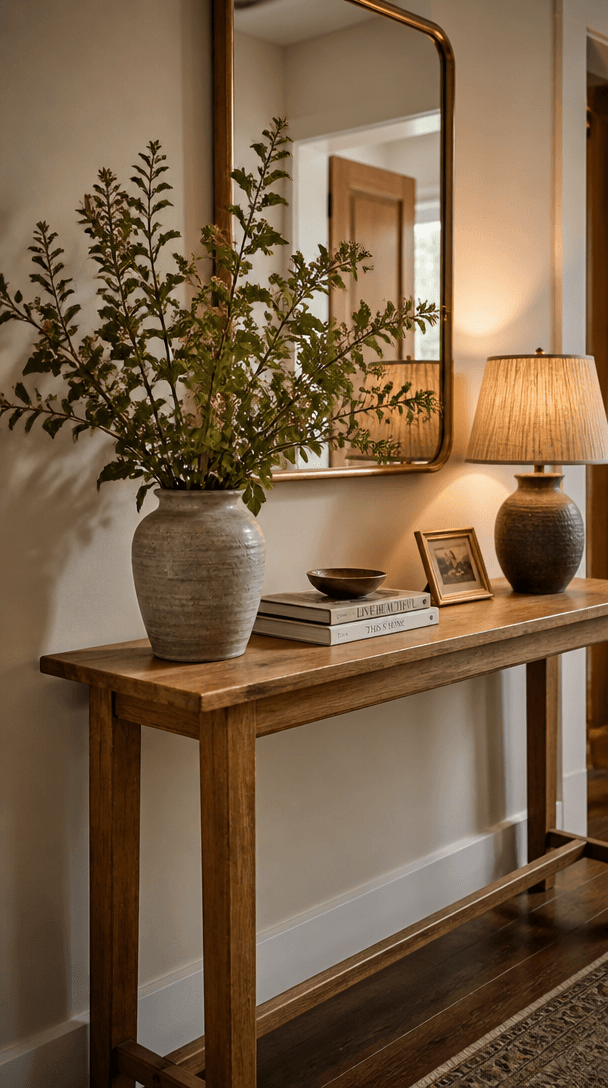
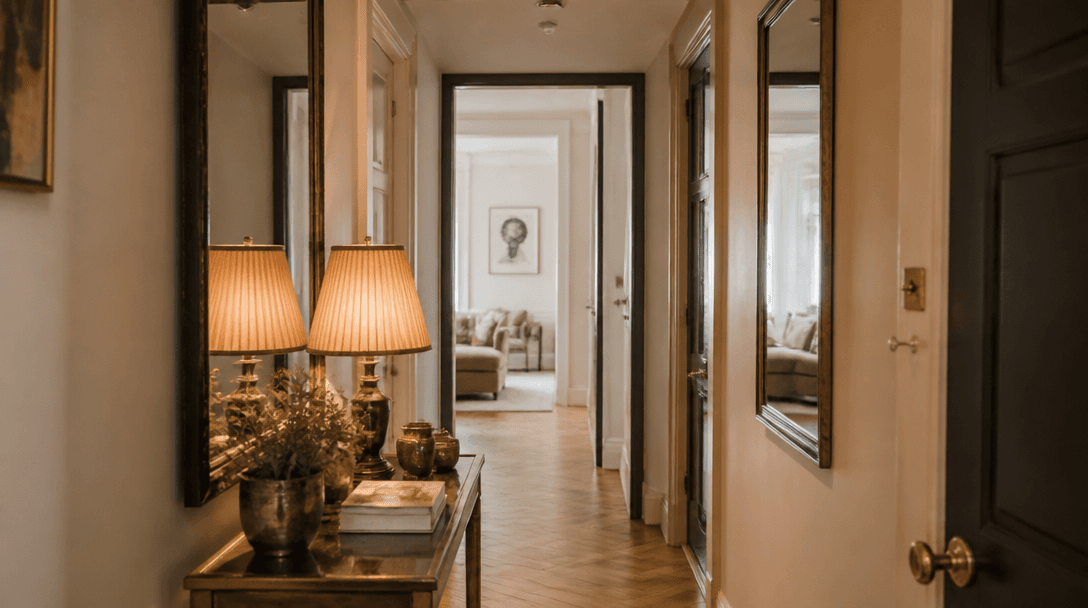
When buying bulbs, pay close attention to the color temperature. Avoid harsh, cold white lights of 6000K, which make your home feel like a clinical laboratory or a hospital lobby. Instead, aim for a warm white or neutral white temperature, ideally between 3000K and 4000K. This mimics the gentle warmth of afternoon sun and feels instantly cozy. You can also add a secondary light source, such as a plug-in wall sconce or a small table lamp resting on a slim console table, to add a soft, eye-level glow that welcomes guests as they enter.
3. Smart Flooring and the Illusion of Depth
Your eyes naturally track patterns on the floor, which means your choice of flooring plays a massive role in how spacious your hallway feels. If your hallway has dark, heavily patterned tiles, it can visually shrink the floor space. If you are renovating, consider replacing the tiles with large-format, light-colored vitrified tiles. Brands like Kajaria and Somany offer beautiful, highly durable vitrified tiles in shades of off-white, light beige, and soft grey with minimal, subtle marble veining.
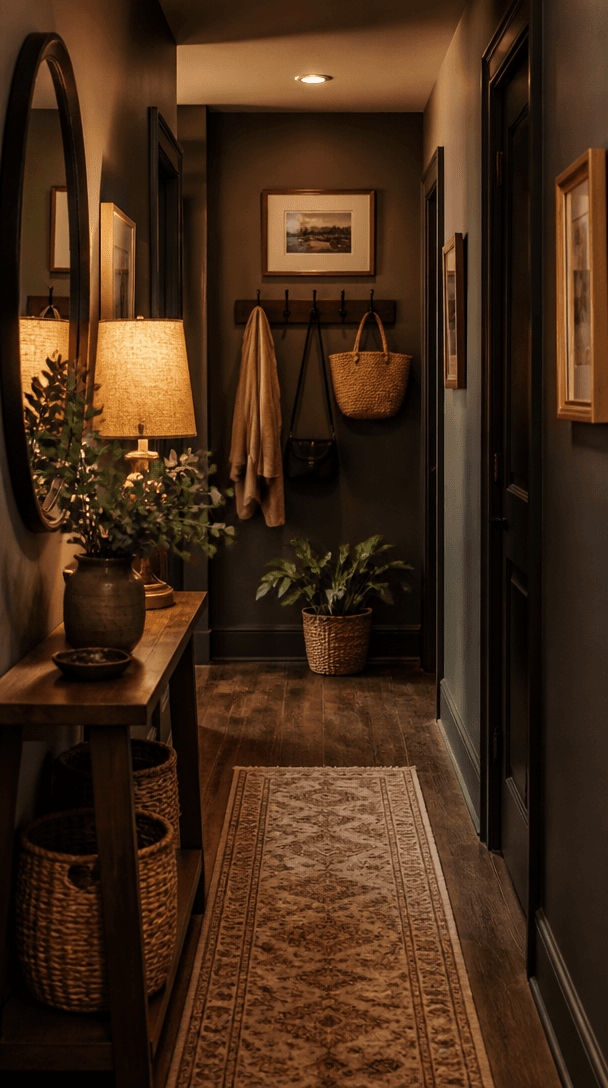
The direction of the tile layout matters too. If you are using rectangular planks or wood-look tiles, lay them running parallel to the direction of the hallway. This draws the eye forward, creating a sense of movement and length. If you are a renter and cannot change the flooring, a long runner rug is your best friend. Choose a runner with simple horizontal stripes to visually widen the path, or choose a light, low-pile jute runner that adds organic texture while being tough enough to handle heavy foot traffic. Jute is also highly practical for Indian homes because it traps dry dust and is incredibly easy to vacuum clean.
4. Conquer the Footwear Chaos: Smart Storage Solutions
Let us address the biggest pain point in Indian entryways: the shoe mountain. In our culture, we do not wear outside shoes inside the house, which means everyone kicks off their footwear right at the threshold. Before you know it, your hallway is a cluttered mess of slippers, sports shoes, and sandals. This clutter is the absolute enemy of a spacious feeling. To make your hallway welcoming, you must hide this visual noise.
If your hallway is exceptionally narrow, traditional bulky shoe cabinets will block the path. Look for ultra-slim, wall-mounted shoe organizers that feature tilting drawers. Brands like Godrej Interio offer sleek metal or engineered wood shoe cabinets that are only five to six inches deep but can hold up to fifteen pairs of shoes vertically. By raising the storage off the floor and mounting it on the wall, you keep the floor space clear, which instantly makes the area feel more open.
If you have slightly more breathing room, a multi-functional storage bench is a game-changer. This provides a neat space to store daily wear sandals underneath while giving your family and guests a comfortable place to sit and wear their shoes. You can throw a couple of colorful cushions on top to add warmth. During the monsoon season, wet umbrellas and muddy shoes are a major headache. Set up a designated corner with a slim metal umbrella stand and a small tray filled with river pebbles where wet shoes can dry without ruining your floors or spreading damp odors.
5. Mirrored Magic: Double the Visual Space
Interior designers have used mirrors to expand tight spaces for decades, and for good reason. A well-placed mirror acts like a faux window, tricking your brain into thinking there is another room beyond the wall while bouncing light into the darkest corners. In a narrow hallway, a large mirror is not a luxury, it is an absolute necessity.
The key lies in strategic placement. Never place a mirror where it will simply reflect a cluttered corner, a blank wall, or the messy side of a shoe rack. Instead, position it on one of the long walls so it reflects an open living area or a window from an adjacent room. This draws the outdoor light inside and makes the hallway feel twice as wide. You can choose a large, minimalist round mirror with a thin brass frame for a modern look, or a series of three smaller, identical rectangular mirrors hung side-by-side to create a rhythmic, gallery-like feel. If your budget permits, a floor-to-ceiling mirrored wall panel can completely transform a tight passage, making it look incredibly spacious and high-end.
6. Adding Personality and Soft Touches
Once you have sorted out the paint, lighting, flooring, and storage, it is time for the fun part: styling. Just because a hallway is a transition zone does not mean it should be devoid of character. You want this space to tell a story about who lives in the home. However, in a cramped hallway, the golden rule is to keep the floor clear and utilize your vertical wall space.
Instead of bulky photo frames that stick out and can be easily knocked down by passing elbows, opt for slim picture ledges. These allow you to display lightweight framed family photos, travel postcards, and small art prints that you can easily swap out whenever you feel like a change. Keep the frames uniform in color, such as all light oak wood or all sleek black, to maintain a clean, cohesive look. You can also install a few high-quality brass or wooden wall hooks from a local home decor store to hang your everyday bags, caps, and keys, keeping them organized and off the floor.
No welcoming Indian home is complete without a touch of greenery. Plants bring life, movement, and a sense of freshness to an otherwise static hallway. Since hallways are typically dark, choose hardy indoor plants that thrive in low-light conditions and require minimal maintenance. The Snake Plant (Sansevieria) and the ZZ Plant (Zamioculcas zamiifolia) are absolute champions for this purpose. They do not mind dry indoor air, handle neglect beautifully, and help purify the indoor air. Place a tall, sleek planter in a corner, or set a small potted money plant on your console table and let its vines cascade gently over the edge.
7. Practical Budget Planning for Your Hallway Makeover
To help you plan your transformation without feeling overwhelmed, let us break down how you can execute this project based on different budget tiers. It is entirely possible to make a massive impact even if you are working with a modest budget.
If you are on a tight budget of under ₹10,000, focus on the high-impact basics. Spend about ₹3,000 on a high-quality bucket of washable paint like Asian Paints Royale to refresh the walls yourself over a weekend. Allocate ₹3,000 for a stylish, large round mirror to hang on the wall. Spend ₹2,000 on a durable jute runner to hide tired floor tiles, and use the remaining ₹2,000 to buy a couple of hardy low-light plants and a set of warm LED bulbs for your existing light fixtures.
If you have a mid-range budget of ₹10,000 to ₹35,000, you can take things a step further. In addition to paint and a mirror, you can invest in a sleek, wall-mounted metal shoe rack from Godrej Interio or a custom wooden bench with hidden storage. You can also hire a local electrician to install a modern track-lighting system to wash your walls with warm light, and add a beautiful slim console table to hold a small table lamp, a key bowl, and some decorative accents.
For those who want a premium makeover with a budget of ₹50,000 and above, you can look at structural upgrades. This includes installing a clean gypsum board false ceiling with integrated LED profile lighting, laying down premium Kajaria vitrified floor tiles, adding custom-designed floor-to-ceiling veneer paneling with mirrored inserts, and incorporating smart home automation so your hallway lights turn on automatically with a warm, low glow when you unlock your front door.
Ultimately, turning a dark, cramped hallway into a welcoming entrance is about showing this neglected space some love and attention. By clearing the clutter, maximizing light, and adding thoughtful design details, you can turn a functional passage into a beautiful, joyful transition that makes you feel genuinely happy every single time you step through your front door. Start small, focus on the lighting first, and watch your entryway transform from a dark tunnel into a bright, warm, and inviting space that proudly says welcome home.