Think back to your childhood home. Chances are, the family pooja room was a spacious, dedicated room filled with the heavy scent of sandalwood, ornate brass bells, and a large, intricately carved wooden mandir. Fast forward to today, and you are likely living in a compact 2BHK or 3BHK apartment in a bustling Indian metro. Space is at a premium, design sensibilities have shifted toward clean minimalism, and those heavy, floor-to-ceiling wooden structures can easily overwhelm a modern home. However, creating a quiet, sacred sanctuary does not mean you have to compromise on your contemporary aesthetic.
The secret lies in blending traditional warmth with clean, modern design lines. As someone who recently renovated an apartment, I know how daunting it can be to design a space that honors your spiritual practices while keeping your living room looking cohesive and clutter-free. You do not want your mandir to look like an afterthought squeezed into a random corner, nor do you want it to clash with your sleek furniture. In this guide, we will walk through practical, beautifully designed solutions to style a modern pooja room that fits your layout, your lifestyle, and your budget perfectly.
Finding the Right Spot: Space-Saving Layouts for Modern Apartments
The biggest challenge in modern apartments is real estate. If you are living in a compact 1BHK or a cozy 2BHK, setting aside an entire room for prayer is simply not feasible. Instead of feeling restricted, look at your home with fresh eyes. Vaastu Shastra traditionally recommends the northeast corner of the home for the pooja space, but if that corner lands in your master bedroom or near a bathroom wall, do not panic. Modern living requires a bit of practical flexibility, and there are several creative ways to adapt these rules to contemporary floor plans.
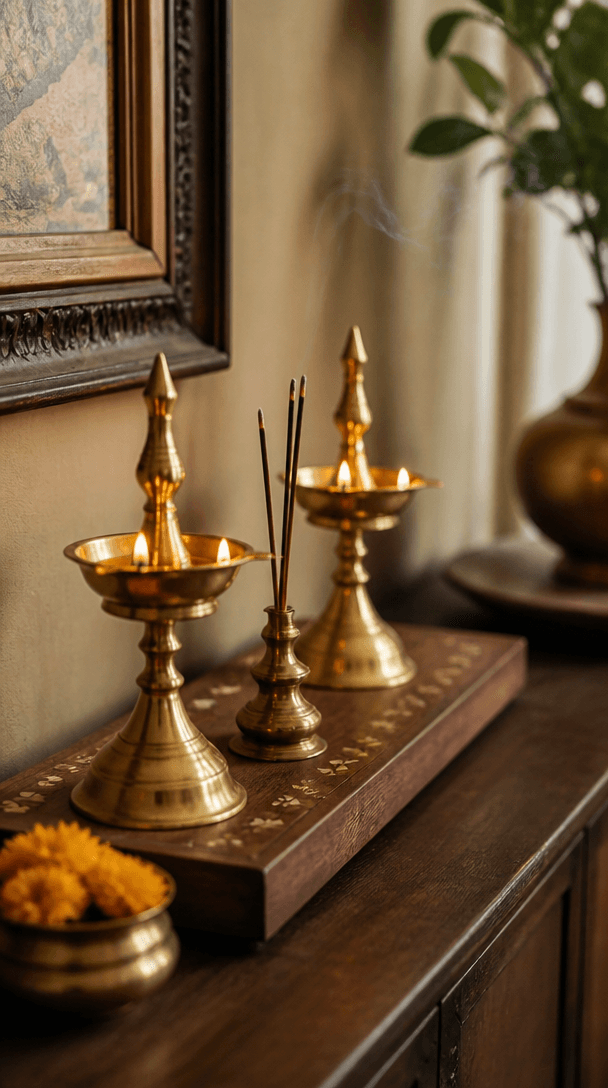
Let us look at the wall-mounted mandir as your first space-saving option. A sleek, wall-hanging wooden or marble unit is perfect for saving precious floor space. You can mount it in the dining area or living room at eye level. To keep it looking modern, opt for a floating shelf design with clean, straight edges instead of heavy carvings. Brands like Godrej Interio offer compact modular units that can be easily adapted for this. By keeping the unit off the ground, your floor remains clear, making your room feel much larger and significantly easier to sweep and mop.
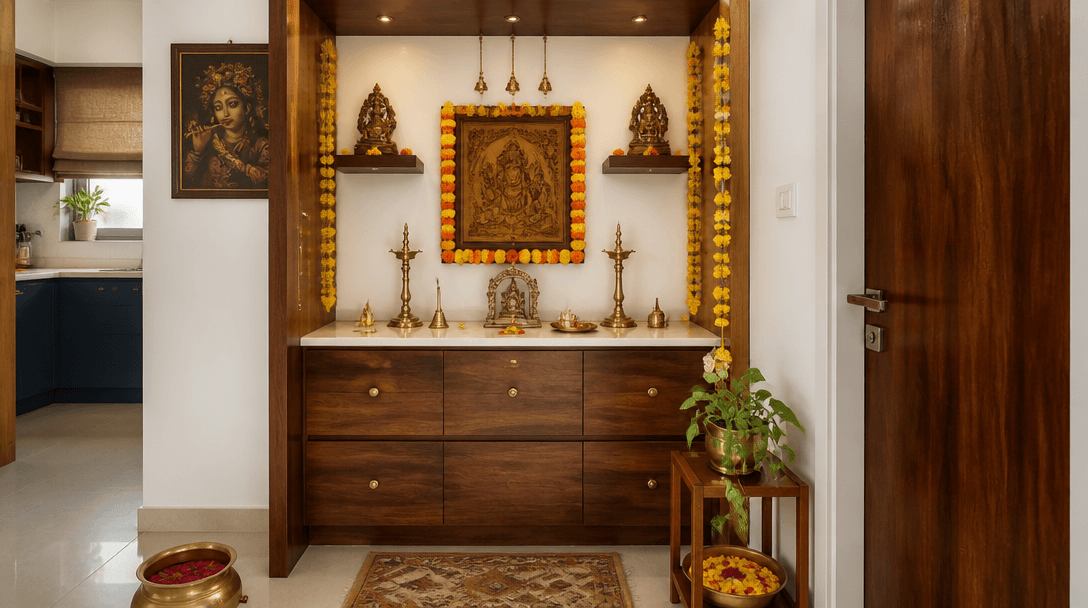
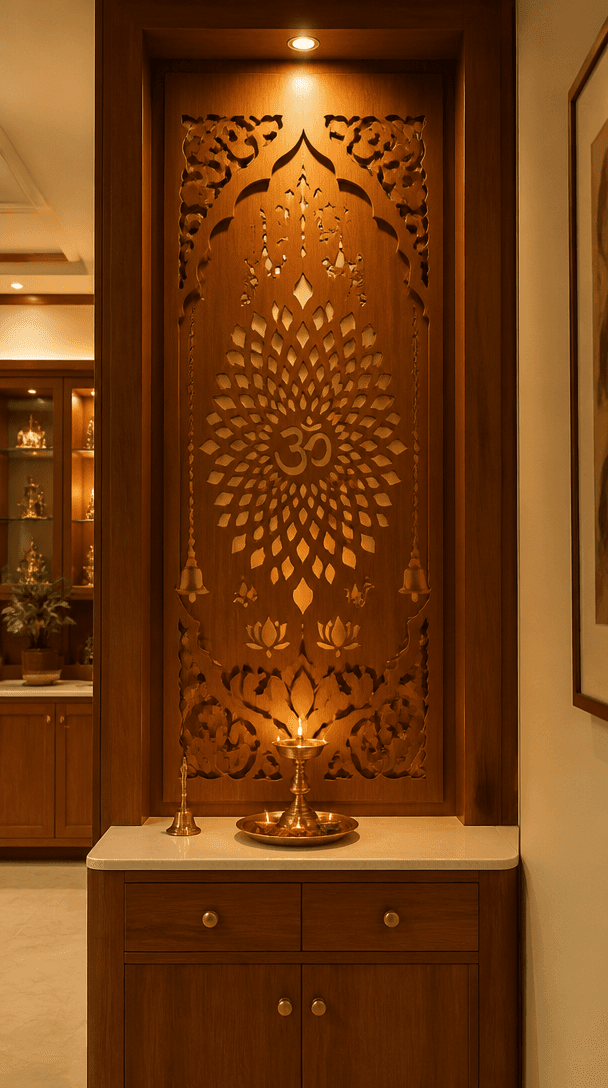
Another brilliant option is utilizing architectural niches. Many modern builders leave small, recessed alcoves or structural niches in the hallway or dining room. Instead of putting a generic decorative vase there, convert this niche into a dedicated pooja zone. You can line the back wall of the niche with a soft textured wallpaper or a beautiful wooden fretwork panel, known as a jaali, to create depth. Add a floating marble slab at the base to hold your idols, and you have an instant, built-in sanctuary that takes up zero extra floor space.
If you live in a rented apartment, permanent structural modifications are usually out of the question due to strict rental agreements. In this scenario, look for multi-functional furniture. A beautiful console table in your living room can double as a pooja unit. Choose a console with deep drawers to hide your daily prayer essentials. During the day, it looks like a chic entryway table with a couple of elegant brass frames and a single small idol. This subtle approach ensures your home feels spiritual without looking overly cluttered or out of place.
Materials and Finishes: Merging Tradition with Contemporary Aesthetics
Traditional pooja rooms are often heavy on dark, intricately carved woods like teak or rosewood. While beautiful, these dark finishes can absorb light and make small modern rooms feel cramped. To achieve a modern aesthetic, we need to balance traditional warmth with lighter, light-reflecting materials. Consider using lighter wood species like white oak, ash wood, or even high-quality MDF finished with a light-colored veneer. These materials offer the same cozy grain patterns of wood but with a much lighter, airier visual footprint.
For the back panel, marble is an exceptional choice. A solid slab of white Indian marble, or even high-gloss marble-look vitrified tiles from Kajaria, can create a stunning, serene backdrop. Marble naturally reflects light, making the entire zone look bright and clean. If you are on a tight budget, look at Kajaria's ceramic wall tile range, which offers beautiful, easy-to-clean stone textures that mimic Italian marble perfectly. Best of all, vitrified tiles are completely impervious to oily soot and turmeric stains, which are common in Indian households.
When it comes to walls, paint plays a massive role in setting the tone. Avoid dark, heavy colors on the surrounding walls. Instead, opt for soft, warm neutrals like cream, ivory, or a very pale beige. A shade like Morning Glory or Ivory Lace from the Asian Paints Royale Glitz series is perfect. The Royale Glitz range is highly recommended because it has an ultra-sheen finish and is wash-resistant. If you accidentally spill holy water, oil, or kumkum, you can simply wipe it clean with a damp microfiber cloth without ruining the paint.
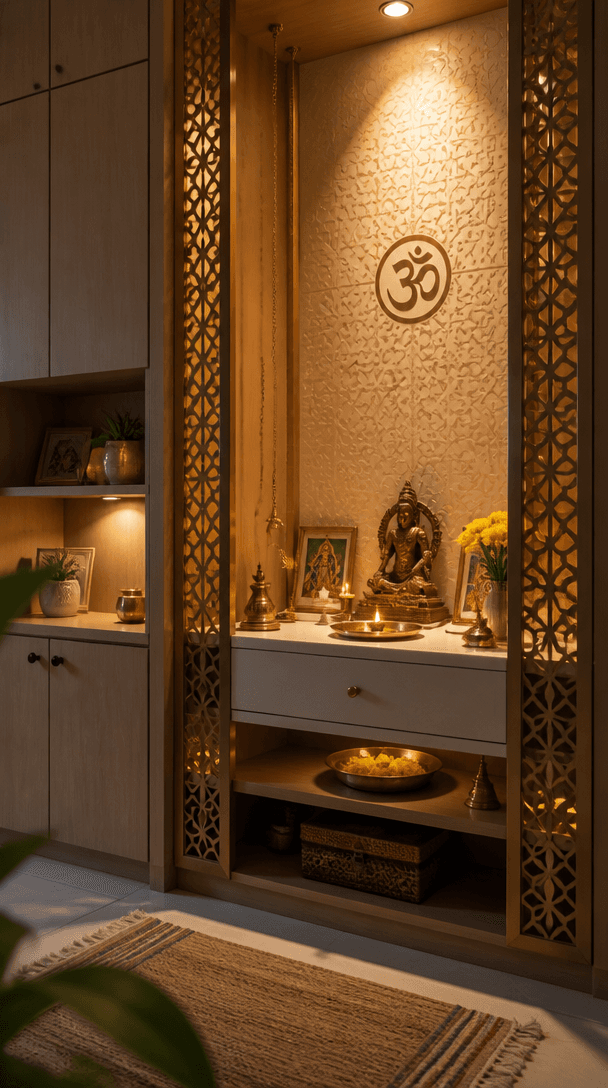
To add a touch of traditional luxury without the visual noise, incorporate brass accents instead of heavy gold paint or ornate silver plating. A simple brass inlay in your wooden paneling, a sleek brass bell hanging from the ceiling, or minimalist brass laminate sheets on drawer handles can instantly elevate the space. Brass has a beautiful, warm glow that ages gracefully, and it bridges the gap between old-world charm and modern chic effortlessly.
Lighting and Ambiance: Creating a Serene, Warm Glow
Lighting is the secret ingredient that transforms a simple corner into a sacred sanctuary. In many modern high-rises, pooja corners are tucked away in areas with very little natural light, such as passages or dining rooms. To combat this, you need a thoughtful layered lighting plan. Avoid harsh, direct white light, which can make the space feel sterile and institutional. Instead, always choose warm white or golden yellow LED lights that mimic the gentle glow of traditional diyas.
Start with hidden cove lighting. If you have a false ceiling or a floating wooden panel behind your mandir, run a flexible LED strip light behind it. This creates a beautiful, soft halo effect that makes your idols stand out without casting harsh shadows. For a truly magical feel, you can also run thin LED strip lights under the shelves. It gives the illusion that the shelves are floating and bathes the entire unit in a gentle, ambient glow.
Safety is another critical factor in modern apartments. Traditional oil or ghee diyas are beautiful, but they can pose a fire hazard, especially if your mandir is built into a wooden cabinet or located near curtains. To keep your home safe, use high-quality brass LED diyas or low-voltage warm spotlighting for daily use. Keep the real flame diyas for special occasions or festivals, and when you do light them, ensure there is at least two feet of clearance above the flame to prevent soot damage and fire risks.
If you love the look of traditional hanging lamps, opt for a single, beautifully crafted brass pendant light with a warm filament bulb. Hanging this in one corner of your pooja zone adds a beautiful vertical element to the design. It serves as a visual anchor, defining the sacred boundary of your prayer space in an open-plan living room.
Storage and Clutter Management: Practical Solutions for Daily Rituals
Let us be honest: the biggest enemy of a beautiful, modern pooja room is clutter. Between plastic matchboxes, half-burnt incense packs, cotton wicks, copper vessels, and old prayer books, it is easy for this sacred space to look messy. A truly modern mandir must prioritize clever storage. If you are customizing your unit, ensure you have at least one deep drawer at the bottom.
To make this drawer functional, treat it like a modular kitchen drawer. Use small plastic or wooden organizers to separate your items. Dedicate one section for cotton wicks and matchboxes, another for incense sticks, and a third for your brass cleaning cloths and oils. By keeping everything off the main platform, you allow the focus to remain on your beautiful idols and the clean design of your mandir.
For prayer books, which can often look untidy when stacked openly, consider a closed cabinet or a beautifully textured fabric binder. You can also use elegant brass or copper storage boxes on the open shelves to hide small, daily-use items. This way, the items are easily accessible, but they contribute to the overall aesthetic rather than detracting from it. It is all about maintaining a clean visual field.
Budget Breakdown: Styling Your Pooja Space on Any Budget
Beautiful interiors do not have to break your bank account. Whether you are living in a temporary rental or designing your forever home, there are realistic ways to style your pooja space. Let us break down three budget scenarios to help you plan your finances.
First, the Budget-Friendly and Rental Tier (₹5,000 to ₹15,000). If you are renting or want a minimalist look on a budget, focus on high-quality ready-made units. You can buy a gorgeous, compact wall-mounted wooden mandir from online retailers or local artisans for around ₹6,000. Paint the wall behind it with a fresh coat of Asian Paints Royale in a warm cream shade (approx ₹2,000). Add a couple of brass lamps and a small, elegant rug for seating, and you have a complete, gorgeous setup under ₹10,000.
Second, the Mid-Range and Semi-Custom Tier (₹25,000 to ₹75,000). This is ideal for 2BHK and 3BHK homeowners who want a built-in look without massive construction costs. Here, you can hire a local carpenter to build a custom plywood unit with a light wood veneer finish. You can use Kajaria ceramic tiles for the back wall to create a high-end stone look (approx ₹5,000 for tiles and installation). Add hidden LED profile lighting and a couple of customized drawers with brass handles. This creates a highly premium, integrated look tailored specifically to your home layout.
Third, the Premium and Custom Tier (₹1,00,000 and above). If you are designing your dream home and have a dedicated corner, you can opt for solid white marble backdrops with intricate water-jet cutting work, custom solid wood cabinetry, CNC-cut wooden or brass jaali screens for privacy, and high-end smart lighting systems. This investment results in a stunning architectural feature that adds massive value and soul to your home.
Maintenance Tips: Handling Indian Weather and Daily Rituals
Designing a beautiful pooja room is only half the battle; maintaining it is where the real challenge lies. The combination of oily ghee lamp residue, fine incense soot, and daily dust can quickly dull even the most expensive materials. Additionally, the Indian monsoon brings high humidity levels, which can cause solid wood to warp or metal idols to tarnish quickly.
To combat daily soot, make it a habit to wipe down the immediate surfaces around your diyas every single day. Using easily washable surfaces like high-quality tiles or glass-topped wooden counters makes this a five-second task. Avoid placing raw, unsealed wood directly under your lamps. For your brass idols and vessels, skip harsh chemicals and use a simple mixture of tamarind paste and salt, or specialized brass cleaning powder once a week. This keeps their golden luster bright without scratching the delicate metal surfaces.
During the humid monsoon months, ensure your wooden mandir has adequate ventilation. If your mandir is housed behind closed doors, keep the doors open for a few hours daily to prevent musty odors and mold growth. Placing small packets of silica gel or activated charcoal in your storage drawers will absorb excess moisture and keep your prayer books and cotton wicks perfectly dry and fresh.
Ultimately, a modern pooja room is not just about matching the latest decor trends. It is about creating a quiet, peaceful corner where you can pause, breathe, and connect with your inner self amidst your busy modern life. By combining clever, space-saving layouts, durable materials, and smart storage, you can build a sacred sanctuary that feels deeply traditional yet fits your modern home beautifully.