We have all been there. You stand at the doorway of your bedroom, take a deep breath, and feel a sudden wave of claustrophobia. In many modern Indian apartments - whether it is a compact 1BHK in Mumbai's suburbs or a cozy 3BHK high-rise in Noida - bedroom square footage is often sacrificed for larger living areas. Your bedroom might measure a modest 10x10 feet, yet it is expected to house a queen-sized bed, a bulky wardrobe, and bedside tables. The air feels tight, and the floor space is virtually non-existent. The typical response is to browse e-commerce apps for space-saving furniture or expensive minimalist decor. But before you open your UPI app, take a step back. You do not need to spend a single Rupee to make your small bedroom feel twice its size. In fact, the most effective space-expanding design secrets require absolutely zero budget, just clever visual strategy.
Expanding a room visually is not about physical expansion; it is about manipulating how light, shadow, and line move across the space. When our eyes scan a room, they constantly look for visual anchors and barriers. Heavy furniture, dark corners, cluttered surfaces, and poorly positioned textiles act as physical stop signs for your gaze, making the walls feel like they are closing in on you. By strategically repositioning what you already own, clearing visual pathways, and using clever styling hacks, you can trick your brain into perceiving a much larger room. It is like an interior design magic trick, and the stage is already set with the items you have right now. Let us walk through the exact, step-by-step changes you can make this weekend to breathe new life and open air into your compact personal sanctuary.
1. The Zero-Rupee Furniture Shakeup
Let’s start with the largest object in your room: the bed. In most standard Indian bedrooms, the natural instinct is to place the bed smack in the center of the main wall. While this symmetry is pleasing in a sprawling master suite, in a tight 2BHK room, it often leaves you with useless, two-foot-wide dead zones on either side. These narrow gaps are too small for functional movement but just large enough to trap dust. To break this layout trap, try pushing your bed against the wall or into a corner, especially for single or double beds. If you have a queen-sized bed and need access from both sides, try shifting it closer to one side to open up a single, wider walkway. This immediate layout change liberates a block of continuous floor space, which instantly registers as a larger room to the naked eye.
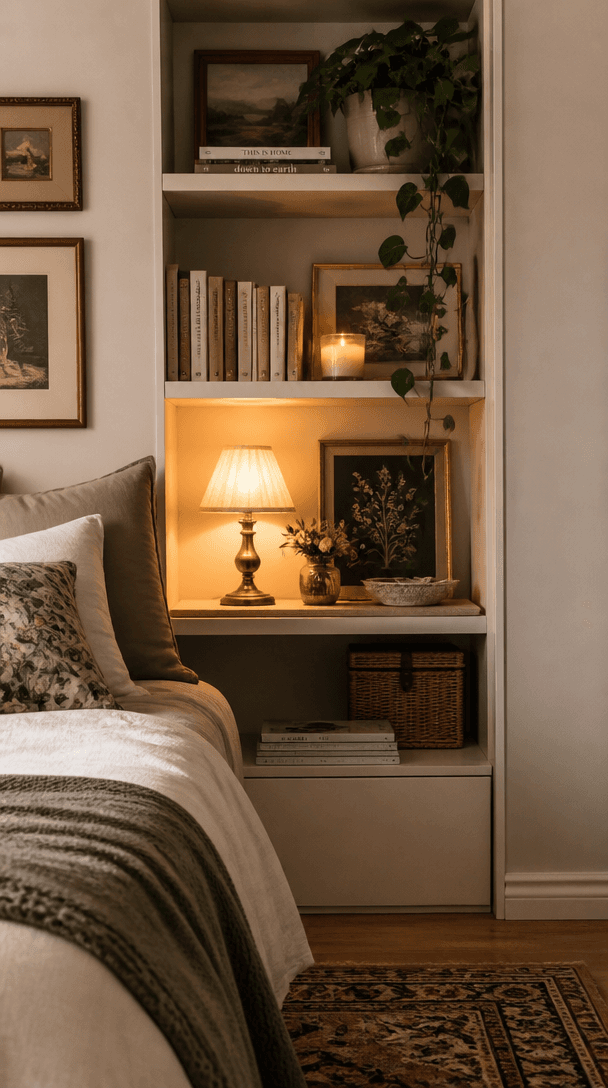
Next, examine your heavy storage units. Many Indian homes rely on freestanding steel almirahs from Godrej Interio or massive wooden wardrobes that sit awkwardly in corners. If these heavy pieces are positioned right next to your bedroom entry door, they create a tunnel effect, making you feel squeezed the moment you step inside. If your room's layout allows, move these bulky, dark-colored wardrobes to the same wall as the door or to the far end of the room where they do not block the entry sightline. When the tallest and heaviest furniture pieces are placed out of your immediate field of vision when entering, the room immediately feels lighter and more welcoming. If a wardrobe is impossible to move due to its weight, make sure its doors are kept shut and any items piled on top of it are completely removed.
2. Clear the Visual Floor and Create Negative Space
One of the golden rules of interior styling is that the more floor space you can see, the larger the room feels. When your eyes can trace the floor uninterrupted from one wall to the other, the brain perceives the room as expansive. However, in compact homes, we tend to use the bedroom floor as a staging ground. Footwear, laundry bags, storage boxes, and even spare plastic chairs find their way onto the floor. To solve this without buying storage bins, look inside your existing wardrobe. Swap out seasonal clothes, pack heavy winter blankets or monsoon gear into old suitcases, and slide them under the bed. By lifting everything off the ground and hiding it from view, you instantly expose the clean Kajaria tiles or wooden flooring underneath, creating a sense of visual relief.
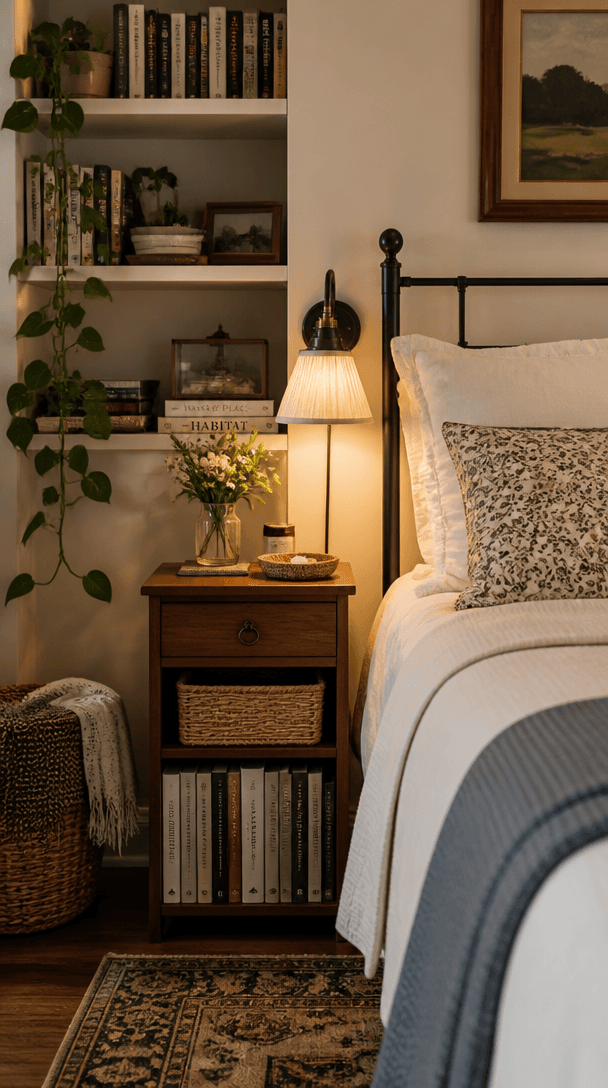
Take this a step further by assessing your bedside tables. If you have bulky, solid wood tables resting on the floor, see if you can swap them with something more open. Perhaps you have a lightweight, leggy wooden stool in your living room or a small folding step-ladder that you can repurpose as a nightstand. Leggy furniture allows light to pass underneath, which keeps the floor line clear and fools the mind into thinking the room is spacious. If your bedside tables have heavy drawers, try relocating them to a different corner of the house entirely. You might realize you don't even need a nightstand on both sides of the bed; a single, minimalist stool on one side might be more than enough to hold your phone and a book, freeing up another precious corner of floor space.
3. The Monochromatic Textile Illusion
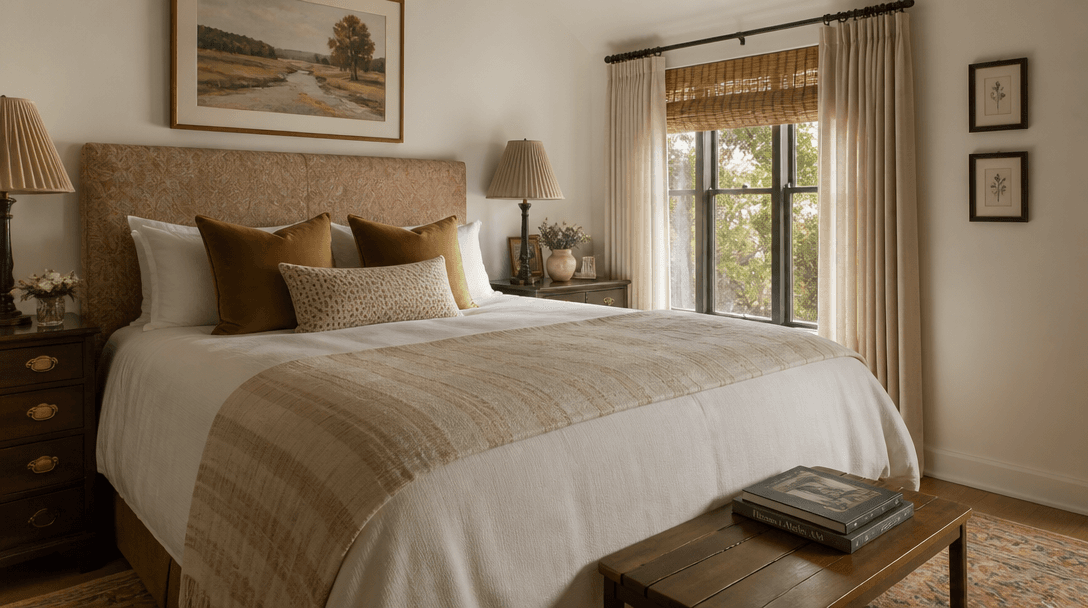
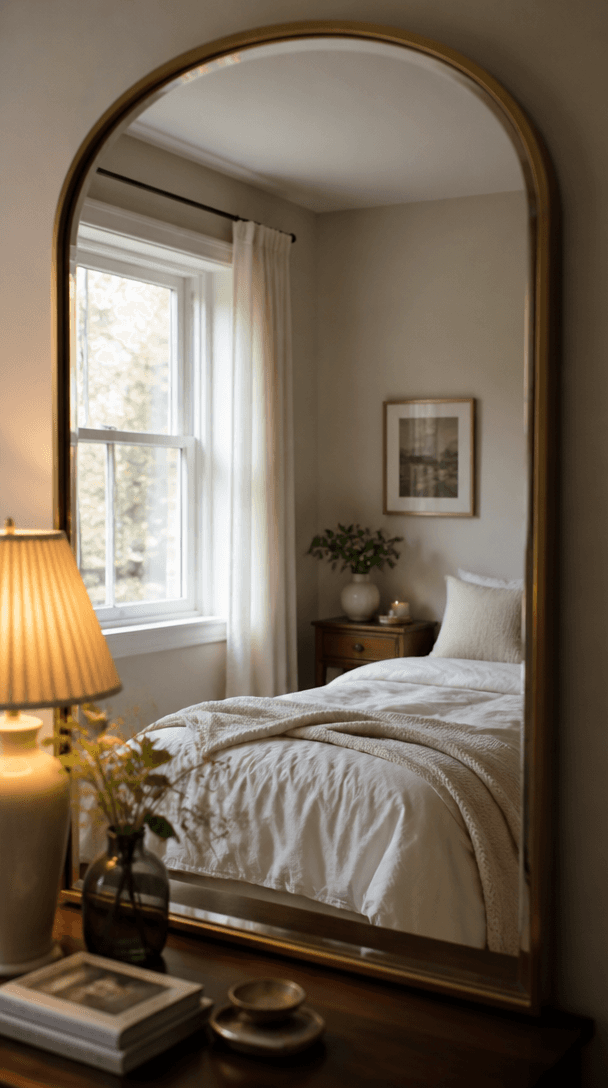
Color is one of the most powerful tools in interior design, and you do not need to buy fresh cans of paint to harness its power. Instead, look at your linen closet. High-contrast colors divide a room into distinct, small visual zones, which makes a tight bedroom look choppy and fragmented. For example, if you have off-white or light beige walls and you drape a dark navy blue or deep maroon bedsheet over your bed, your eye immediately locks onto the bed as a massive, heavy block. To combat this, find your lightest, most neutral bedsheets - preferably in whites, creams, light greys, or soft pastels that closely match your wall color. When your bedding matches or closely coordinates with the wall behind it, the boundaries of the bed blur into the room, creating an unbroken visual flow that makes the entire space feel airy and cohesive.
The same trick applies to your existing window curtains. If your bedroom features heavy, dark curtains that stand out starkly against light walls, they act as a visual barrier, chopping up the wall space and making the ceiling feel lower. Swap them with lighter-colored curtains from another room in your house, or simply pull the existing dark curtains completely to the sides of the window frame during the day. If your curtain rods are adjustable, slide the brackets outward so the curtains frame the window rather than blocking it. This adjustment exposes more glass, lets in natural light, and creates the illusion of a wider window. Tie them back using ribbons or scrap fabric to keep the lines clean.
4. Harness the Power of Existing Mirrors
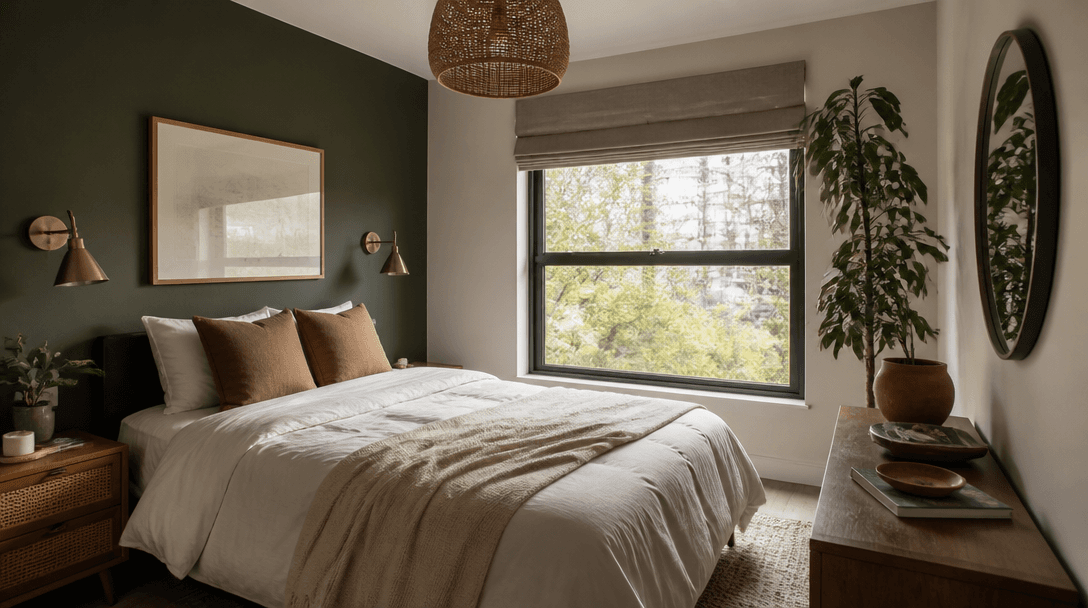
Mirrors are a designer's secret weapon for doubling the perceived size of any tight room, but you don’t need to purchase an expensive new mirror to make this work. Go on a scavenger hunt around your home. Do you have a mirror hanging in the hallway, an extra vanity mirror in the guest bathroom, or a decorative mirror sitting unused in a cabinet? Relocate it to your small bedroom. The key is strategic placement: hang or lean the mirror directly opposite your bedroom window. By positioning it here, the mirror catches the incoming natural daylight and reflects it deep into the darkest corners of the bedroom. It also reflects the outdoor view - be it green treetops or the open sky - essentially creating a 'second window' that instantly breaks the boxy, enclosed feeling of four solid walls.
If your only available mirror is fixed to your dressing table or wardrobe door and cannot be moved, you can still optimize it. Clear away any clutter that is currently sitting in front of it. We often pile perfumes, hairbrushes, and jewelry stands right before a mirror, which blocks its reflective potential and actually doubles the visual clutter. By wiping the mirror clean with a simple home solution of water and vinegar and leaving the space directly in front of it empty, you allow the mirror to do its job: bouncing light around the room unimpeded. This small change costs nothing but instantly makes the dressing area feel polished, bright, and expansive.
5. Battle Urban Dust and Clean the Window Panes
In busy Indian metropolitan areas, dust is a daily battle. Over weeks and months, a fine layer of grey grime settles silently on our glass window panes and wire mesh mosquito screens. While we might not notice it consciously, this dusty film acts as a filter, cutting out a significant percentage of natural daylight and casting a dull, gloomy shadow over the entire bedroom. Gloomy, dim spaces naturally feel smaller and more claustrophobic. Your zero-rupee mission for this weekend is to thoroughly clean your bedroom windows inside and out. Take down the mosquito screens, wash them, and wipe down the glass using an old newspaper and water. The difference will surprise you. The sudden influx of clean daylight bouncing off your floor tiles will instantly make the room feel fresher, brighter, and significantly larger.
While you are cleaning, look at the window sill itself. It is highly common to use bedroom window sills as a dumping ground for half-dead potted plants, loose coins, water bottles, and chargers. Clear everything off the sill. A clean, empty window sill allows the eye to travel easily from inside the room to the outside world, creating a seamless connection with the outdoors. Even if your view is just another apartment building across the street, the uninterrupted line of sight tricks your brain into feeling that your living space extends far beyond the physical concrete walls of your bedroom.
6. Edit Your Surfaces to 50% Capacity
Take a hard, honest look at the flat surfaces in your bedroom: the top of your dresser, your bedside tables, and perhaps a small study desk. When these surfaces are packed with books, charging cables, cosmetics, and cups, they create visual noise. Visual noise is the enemy of spatial perception. To fix this, apply the '50% rule' using items you already have. Clear off every single object from these surfaces and place them on your bed. Now, only put back half of them - the items you absolutely need on a daily basis. For the rest, find homes for them inside your existing drawers, wardrobe shelves, or in other rooms. For example, relocate that stack of unread novels to the living room bookshelf, and move your collection of daily skincare to a basket inside your cupboard.
For the items that must remain on display, use the 'tray trick' to keep them organized. You don't need to buy a fancy organizer; simply find a flat plate, a small wooden tray, or even a pretty cardboard box lid from a recent delivery. Group your daily essentials - like your watch, car keys, and lip balm - inside this tray. Visually, the brain registers a group of items on a tray as a single cohesive unit rather than five separate pieces of clutter. This tiny organizational shift dramatically reduces cognitive load when you look around the room, making your bedside table feel clean, styled, and purposefully curated rather than messy and overcrowded.
7. Taming the Cable Chaos and Electrical Clutter
In our highly digital lives, bedrooms are often overrun by a spiderweb of charging cables, extension cords, and power strips feeding our phones, laptops, and bedside lamps. These tangled black and white wires trailing along the floor or hanging from wall outlets are massive visual distractions that cut up your wall and floor lines. To clear this up without buying expensive cable organizers, use simple household items like twist-ties from bread packets, rubber bands, or binder clips. Coil your long cables neatly and secure them out of sight behind your bed headboard or bedside tables. If you have a multi-plug extension board resting on the floor, tuck it away onto a lower shelf of your nightstand or secure it behind the bed frame using tape. Clearing this floor-level visual chaos instantly streamlines the room’s perimeter, making the entire layout look much cleaner and more spacious.
Making a small bedroom feel bigger is not about changing your physical square footage or spending hard-earned money on new decor trends. It is about understanding how to work with light, lines, and layout to maximize what you already have. By simply rearranging your furniture, cleaning your window glass, organizing your textiles, and clearing visual clutter off the floor and surfaces, you can transform your cramped bedroom into an airy, peaceful retreat. Take a few hours this weekend to try out these zero-rupee hacks - your mind, your home, and your wallet will thank you.